A Door Viewer, also called a peephole, is a small optical device installed through a door that lets you see who is outside before you open it. From the inside, it provides a wide-angle view of the corridor, porch, or entryway. From the outside, it is designed to limit visibility into the room for privacy. Door viewers are widely used on apartment doors, hotel room doors, office doors, and many residential entry doors because they add a practical layer of security without changing the door structure or requiring power.
To see door viewer styles, sizes, and finish options, browse the Glowing Hardware door viewer range.
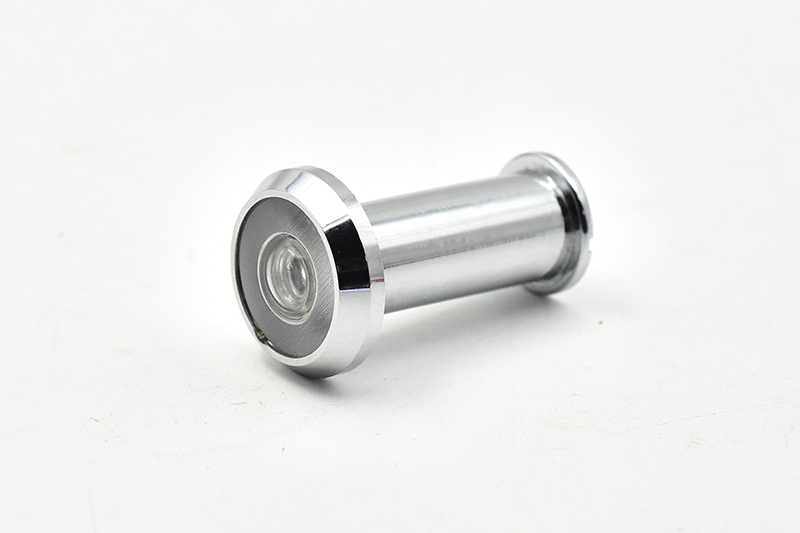
A door viewer uses a set of lenses (or a lens group) inside a small metal tube. The tube passes through a drilled hole in the door, and two pieces tighten together from each side. The lenses create a wide field of view so you can check the area outside even if someone is standing slightly off-center.
A typical viewer system includes:
An exterior lens cap that faces the hallway or outdoor area
A main barrel that fits the drilled hole
An interior eyepiece that you look through
Optional features such as a privacy shutter, cover plate, or wide-angle lens upgrade
Because it is fully mechanical and compact, a door viewer is easy to maintain and works reliably in everyday use.
A door viewer is a simple upgrade, but it solves common entry risks:
Confirms visitor identity before opening the door
Reduces surprise entry situations and unwanted solicitation
Improves privacy by limiting outside visibility into the interior
Helps households and facilities follow safer visitor-handling routines
For property managers and project contractors, door viewers are also easy to standardize across units, making maintenance and replacement more consistent.
Door viewers are often categorized by viewing method and function.
A classic peephole with a fixed optical lens. It is cost-effective, durable, and widely used in residential and hospitality projects.
A wide-angle viewer increases the visible area, reducing blind spots near the door frame. It is often chosen for corridors and high-traffic buildings.
A shutter blocks the inside lens when not in use. This helps prevent reverse viewing attempts and adds a cleaner visual appearance from the inside.
Digital models use a camera and screen. These can be useful in specific scenarios, but they require power and typically have more complex installation and maintenance needs.
If your priority is reliability, long service life, and low maintenance, optical viewers are often the preferred choice.
Door viewers must match the door thickness. If the barrel is too short, it will not tighten securely. If it is too long, it may sit loose or require spacers. Always confirm the door thickness before ordering.
Most door viewers require a standard hole size, but it can vary by model. For upgrades, confirm whether the new viewer fits the existing hole or if re-drilling is required.
A wider viewing angle provides better coverage of the entry area. This is especially important for apartment corridors, hotel doors, and office suites where visitors may stand to the side.
Common materials include brass and stainless steel, often with plated or coated finishes. Finish selection affects corrosion resistance and visual matching with other Door Hardware like handles and locks.
Clear optics help you identify faces and read visual details such as delivery uniforms or badges. Better lens design can also reduce distortion at the edge of the view.
| Application Scenario | Recommended Features | Why It Helps |
|---|---|---|
| Apartments And Condos | Wide-angle, privacy shutter option | Better corridor coverage and improved privacy |
| Hotels And Hospitality | Stable optical clarity, consistent finish matching | Guest safety and unified room hardware appearance |
| Offices And Commercial Doors | Durable barrel, finish aligned with door hardware | Higher use frequency and consistent facility standards |
| Residential Entry Doors | Wide-angle preferred, corrosion-resistant finish | Better porch visibility and outdoor durability |
For large deployments, choosing one or two standardized models can simplify replacement parts and future reorders for a wholesale program.
Door viewers are usually installed in a few steps:
Measure door thickness and mark the viewer height
Drill the correct diameter hole cleanly through the door
Insert the exterior lens side and thread the interior eyepiece
Tighten until secure, without over-torquing
Test the view angle and confirm the exterior lens sits flush
Compatibility tips:
Avoid placing the viewer too close to existing locks or reinforcement plates
For metal doors, ensure drilling is controlled to prevent burrs that scratch finishes
For fire-rated doors, follow local requirements and confirm whether viewer installation is permitted
If you are replacing an old peephole, confirm both the hole diameter and the door thickness, since older doors can vary widely.
Door viewers are low-maintenance, but basic care helps keep the image clear:
Wipe the exterior lens gently with a soft cloth
Avoid abrasive cleaners that can haze the lens
Check for loosening over time, especially on doors that slam
Replace the unit if the lens becomes permanently scratched or fogged
Common issues and quick fixes:
Blurry view: clean both sides of the lens and check for condensation
Loose viewer: re-tighten the interior eyepiece carefully
Limited view: consider a wide-angle model if the corridor coverage is insufficient
For project orders and OEM/ODM programs, a clear specification prevents mismatched parts and on-site delays:
Door thickness range and required barrel length
Hole diameter requirement
Viewing angle target
Material and finish code for matching other door hardware
Privacy shutter requirement if needed
Packaging and labeling for unit-by-unit installation
Consistent specifications are especially valuable when ordering in bulk across multiple buildings or phases.
A door viewer is a compact, mechanical security feature that lets you see outside your door before opening it. The best choice depends on door thickness, hole diameter, viewing angle, finish matching, and whether you need a privacy shutter. With the right specification, door viewers are easy to install, easy to maintain, and simple to standardize across residential and commercial projects.
To review sizes, finishes, and configuration options, browse the Glowing Hardware door viewer range. If you have questions about compatibility, project specifications, or bulk order planning, contact Glowing Hardware for guidance. We can help you select the right model and support stable supply for your installation needs.