
lever door handles look similar across many buildings, which makes it easy to assume they are universal. In practice, most lever handles are only universal in a limited sense. Many sets are designed to fit common door preparations, but compatibility still depends on the door thickness, backset, latch type, bore hole size, mounting pattern, and whether the door uses a tubular latch or a Mortise Lock. If any one of those factors does not match, the handle may not install cleanly, may feel loose, or may not retract the latch reliably.
This guide explains what is and is not universal about lever door handles, how to check fit before buying, and how to avoid common ordering mistakes for projects and replacements. To explore stainless steel lever options and construction styles, visit the Glowing Hardware stainless steel tube lever handle range.
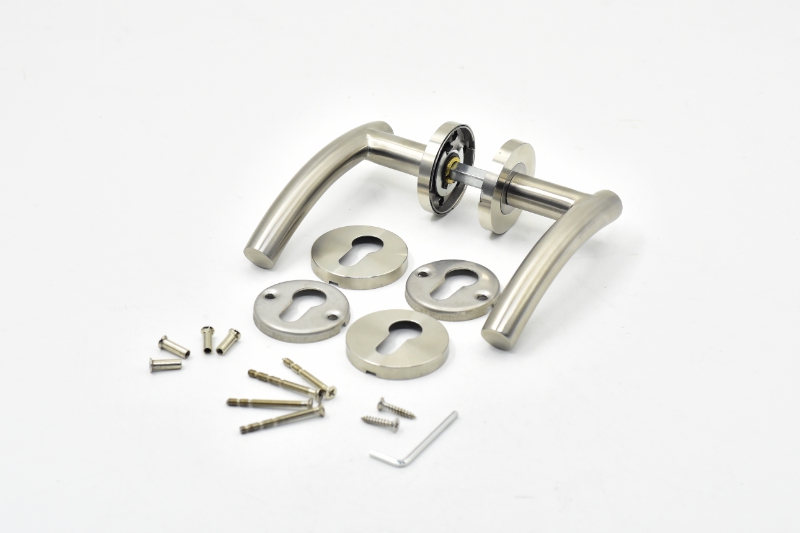
When buyers say universal, they typically mean one of these:
The handle will fit most interior doors without drilling new holes
The handle works on both left-hand and right-hand doors
The handle fits standard latch dimensions and standard door thickness
The handle can replace a knob without changing the latch
Some lever handle sets do meet common standards, especially in markets where door preparations are standardized. However, there is no single lever handle that fits every door worldwide without checking measurements.
Door thickness is one of the most important fit points. A handle set must have through-bolts and a spindle long enough to clamp securely. If the door is thicker than expected, the handle may not tighten properly. If the door is thinner than expected, the handle can bottom out and still feel loose.
In multi-building projects, door thickness can vary between interior partitions, fire doors, and entrance doors, so measuring on-site prevents mismatches.
Backset is the distance from the door edge to the center of the handle hole. If the latch does not match the door’s backset, the spindle alignment can be off, leading to stiff operation or incomplete latch retraction.
Some latches are adjustable, which increases compatibility, but not all latch designs support adjustment. This is why a lever handle is not automatically universal just because the rose diameter matches.
Most tubular latch lever sets use a standard bore hole. If the existing hole is oversized, damaged, or nonstandard, the handle may not cover it cleanly or may not clamp securely. If the hole is undersized, installation may require drilling or reaming.
For renovation work, the condition of the bore hole matters as much as the nominal diameter.
A lever handle designed for a tubular latch does not automatically fit a mortise lock door. Mortise doors use a different internal mechanism and often require:
A specific spindle size and follower profile
Specific screw positions and door prep
Specific escutcheon or backplate dimensions
If your door edge shows a large rectangular mortise case, you must select mortise-compatible hardware.
Even within tubular latch designs, mounting patterns differ. Some handles use through-bolts; others use concealed fixings and screw posts. If the existing door has a particular hole pattern or reinforcement plate, mismatch can mean extra drilling.
For project orders, standardizing mounting patterns across a site simplifies installation and spare parts management.
Lever handles are also not universal by function. A handle may be:
Passage function for hallways
Privacy function for bathrooms
Keyed entry for doors requiring access control
Dummy trim for fixed pulls or inactive doors
The same lever shape can exist in multiple functions, and choosing the wrong function is a common purchasing error in bulk orders.
Many modern lever handle sets are designed to be reversible, meaning they can be installed on left-hand or right-hand doors without changing parts. However, not every design is reversible, particularly in specialized lock bodies, certain return-to-door lever shapes, or access-control configurations.
Before ordering, confirm:
Whether the lever is non-handed or field reversible
Whether the latch is compatible with the door swing and strike orientation
Whether the lever return direction meets local compliance expectations
A key point is that appearance can be misleading. Two lever handles may look interchangeable but have different internal standards.
Common examples:
Similar-looking round roses with different screw post spacing
Different spindle dimensions that affect latch retraction
Different latch faceplate shapes that affect door-edge fit
Different door thickness ranges supported by the same-looking trim set
That is why the correct approach is measurement-based, not appearance-based.
Use this checklist for replacements and for project specification.
Measure door thickness
Confirm latch type at the door edge
Measure backset from edge to center of bore
Check bore hole size and condition
Confirm mounting screw pattern or through-bolt style
Confirm function needs for each door
Confirm finish requirements for the environment, especially humid or coastal zones
This prevents the most common problems: loose handles, binding action, and time lost on rework.
| Item | Often Standardized | Often Varies |
|---|---|---|
| Basic lever shape categories | Yes | Specific return shape and geometry |
| Tubular latch concept | Yes | Latch dimensions and adjustability |
| Door swing compatibility | Sometimes | Some levers are handed |
| Bore hole concept | Yes | Diameter and existing hole condition |
| Backset options | Sometimes | Exact backset on older doors |
| Door thickness range | Sometimes | Thick doors and special doors |
| Mortise compatibility | No | Highly dependent on lock body standards |
| Mounting pattern | No | Screw post spacing differs by design |
This is why lever handles are not truly universal across all door types, but many are compatible with common preparations when specified correctly.
Buying based on looks alone
Matching the rose shape does not guarantee matching the internal dimensions.
Ignoring latch type
Tubular and mortise systems are not interchangeable without changing the lock.
Forgetting door thickness
A handle that cannot clamp fully will loosen repeatedly.
Not checking the strike alignment
A misaligned strike can make the new handle feel faulty even when it is installed correctly.
Mixing functions within the same corridor
In large installations, inconsistent function selection creates user confusion and increases maintenance calls.
If you want maximum compatibility across many doors, the strategy is to standardize the door preparation and hardware spec.
Practical steps:
Set a single backset standard across the site
Choose a latch type and keep it consistent
Standardize door thickness ranges and reinforcement plates
Select lever sets with adjustable latches and flexible mounting where appropriate
Confirm replacement parts availability and finish consistency
For long-term maintenance, using consistent internal standards often matters more than the external style.
Lever door handles are not fully universal, but many can fit a wide range of doors when the key dimensions match. Compatibility depends on door thickness, backset, bore size, latch type, mounting pattern, and function requirements. If you measure first and specify consistently, you can achieve smooth replacements and efficient installations across different rooms and doors.
To review stainless steel lever handle options and configuration choices, browse the Glowing Hardware stainless steel tube lever handle range. If you share your door thickness, latch type, backset, and function needs, our team can help confirm fit and recommend practical specifications for your project.
Previous: What Is The Best Door Peephole Viewer?
Next: What Is A Door Viewer?