The best door peephole viewer is the one that delivers a clear, wide-angle view with reliable privacy, fits your door thickness accurately, and stays stable after years of daily use. For property managers, hotel operators, and construction contractors, a Door Viewer is not a decorative accessory. It is a safety component that must be consistent across rooms, easy to install at scale, and durable under frequent turnover and cleaning routines.
This guide explains how to choose the best door peephole viewer for real projects, what specifications matter most, and how to avoid common sourcing and installation mistakes. Glowing Hardware provides multiple configurations of door peephole viewer solutions for hospitality and building projects. You can contact us for more solutions.
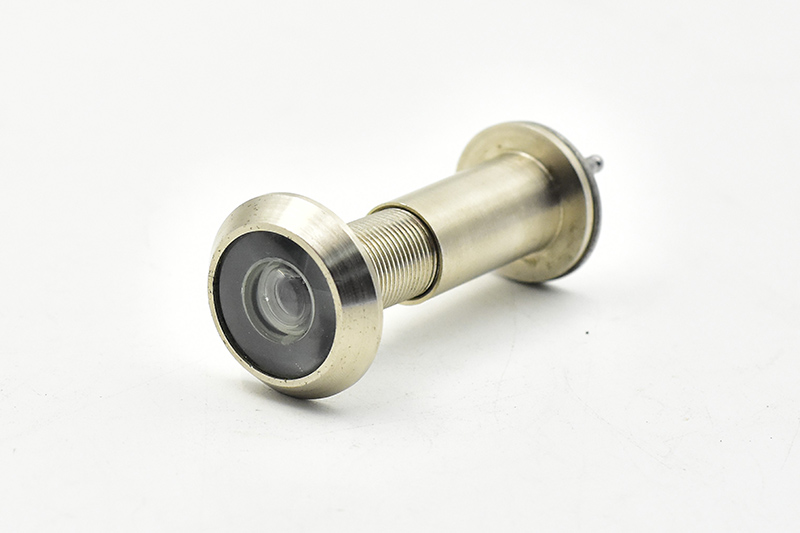
A door peephole viewer is judged by performance and fit, not by a single feature. In procurement, best typically means fewer service calls, lower risk during installation, and consistent user experience across a property. That requires aligning the viewer’s optical design with the door construction, fire-rating requirements if applicable, and the expected environment.
For hotel and engineering projects, best also means you can standardize. The same model should cover common door thickness ranges, match typical bore sizes, and support repeat installation by different teams without quality drift.
A wide field of view reduces blind spots in corridors and improves user confidence. In practical selection, you want an angle wide enough to see both sides of the door line without forcing the user to move their head. At the same time, clarity matters as much as angle. A very wide lens that produces distortion or haze can be less useful than a slightly narrower lens with better definition.
When reviewing specifications, focus on:
Field of view angle and whether it remains clear near the edges
Image brightness under low indoor lighting
Visual distortion and color tinting that can hide details
A practical way to validate optical quality is to request sample units and test in the actual corridor lighting conditions, especially in hotels where warm lighting can reduce perceived sharpness.
Most installation failures come from poor fit, not poor optics. A door viewer must match door thickness, because the barrel length determines whether the two sides clamp securely. If the barrel is too short, threads may not engage fully and the viewer loosens. If it is too long, the viewer may bottom out before the trim seats, causing wobble or uneven pressure.
To reduce rework, confirm these dimensions during sourcing:
Door thickness range the viewer supports
Recommended hole diameter for installation
Thread length and engagement depth
Trim projection and whether it interferes with door frames or seals
For multi-room projects, it is often better to choose a model that covers a wider thickness range to accommodate door variation between batches.
For residential units and hotels, privacy is part of perceived safety. Many buyers prefer designs that reduce reverse viewing, meaning it is difficult for someone outside to see inside through the viewer. This is especially important on higher floors or in properties with shared corridors.
In addition to privacy, interior comfort matters. A viewer should be easy to use for different heights, and it should not create sharp reflections that confuse the user in bright corridor conditions.
Door viewers face frequent touching, cleaning chemicals, and humidity changes. A durable model should maintain finish stability and mechanical tightness over time. If the finish wears quickly, it can look inconsistent across guest rooms. If internal parts corrode, the viewer can seize, loosen, or discolor.
When evaluating durability, consider:
Base material choice and coating performance
Thread precision and wear resistance
Long-term stability under routine cleaning and humidity
For projects that require consistent room standards, finish stability is not only cosmetic. It affects inspection outcomes and reduces replacement cycles.
In commercial projects, installation speed and error tolerance are major cost drivers. The best door peephole viewer is one that installs cleanly with standard tools and does not require complex steps or specialized processes. Many UK and EU project workflows prefer straightforward mechanical installation and may avoid welding-related procedures for Door Hardware integration, so a clean, no-welding installation approach reduces site friction and simplifies approval.
A reliable installation design typically includes stable gaskets or seating surfaces, smooth threading that does not cross-thread easily, and trim parts that sit flush without forcing.
Misaligned drilling that enlarges the hole and reduces clamping strength
Overtightening that damages door skins or causes trim deformation
Under-tightening that leads to rotation and loosening over time
Mixing parts from different batches that changes fit consistency
If you are managing a hotel rollout, a practical installation guide and standardized torque approach can reduce callbacks significantly.
Glowing Hardware supports customers who serve hotels and construction engineering projects. Beyond supplying hardware, we focus on making selection and deployment predictable: a professional design team to support custom OEM requirements, practical installation guidance for on-site teams, and a problem-solving approach that targets common failure points such as fit inconsistency and loosening.
You can review available configurations in our door viewer collection and shortlist models based on door thickness range, finish expectations, and project rollout needs.
The best door peephole viewer is defined by clear optics, wide-angle visibility with controlled distortion, reliable privacy, and the correct mechanical fit for your door thickness and bore size. For hospitality and building projects, best also means predictable installation, stable finishes, and fewer maintenance callbacks. Selecting a durable model and validating fit before bulk ordering is the most effective way to protect schedule and quality.
If you are sourcing door viewers for a hotel program, apartment project, or renovation rollout, contact Glowing Hardware with your door thickness, hole size, finish target, and quantity plan. We can recommend practical options, provide installation guidance, and support OEM specifications to help you standardize across rooms and reduce long-term service risk.