
Removing a commercial Mortise Lock is a controlled disassembly job, not a force-and-pry task. Mortise locks are designed for heavy-duty traffic, tight alignment, and long service life, so the lock body sits deep inside a pocket cut into the door edge. If you remove it in the correct order, you protect the door prep, avoid stripping fasteners, and preserve the parts you may need for rekeying, troubleshooting, or replacement.
This guide explains a practical, professional method to remove a commercial mortise lock from a metal or wood door, including common trim types, cylinder handling, and what to check before you install a replacement. Glowing Hardware supplies commercial mortise lock solutions for project and facility use.
Before removing anything, verify what the lock is doing today. Is the latch sticking, the deadbolt not throwing, the handle drooping, or the key not turning smoothly. This matters because you may discover the problem is misalignment at the strike or a loose trim component rather than a failed lock case.
Check whether the door is fire-rated or part of an egress route. On many sites, maintaining door integrity is a compliance requirement, so you should avoid enlarging holes, drilling new prep, or leaving the door unsecured during operating hours. If the opening must stay secure, plan to remove and reinstall in the same session.
Commercial mortise locks commonly appear in these configurations:
Lever handle or knob trim with a mortise lock case and a separate cylinder
Keyed cylinder on the exterior with thumbturn or lever inside
Hotel or apartment-style trim with concealed mounting screws
Functions that include latch only, latch plus deadbolt, or latch with auxiliary deadlatch
You do not need the full function code to remove the lock, but you do need to locate the mounting points: trim screws, spindle, cylinder, and the edge plate screws that hold the lock case.
Most removals can be completed with basic tools. The key is using the correct bit size to avoid cam-out and damaged screw heads.
| Item | Why It Matters |
|---|---|
| Screwdriver set | For trim screws and edge plate screws |
| Hex key set | For lever set screws on some trims |
| Small flat screwdriver | For retainer clips or cover plates |
| Needle-nose pliers | For clips, spindles, and small parts |
| Painter tape and tray | To protect finish and keep parts organized |
If the door is high-traffic, having a door wedge and a second person to steady the leaf can reduce accidental movement during disassembly.
Start from the faces of the door. If you have levers, check for a small set screw on the lever neck. Loosen it and slide the lever off. Some trims use a concealed release pin, so look for a small access hole on the underside.
Next, remove the visible mounting screws. Commercial trim often uses through-bolts that pass through the door into the opposite trim. Support the opposite side so it does not drop or rotate when you remove the final screw. Once screws are out, pull the trim straight away from the door. Avoid twisting, because twisting can scratch finishes and can deform escutcheon plates.
If you encounter a decorative cover plate, remove it gently to expose hidden screws. Do not pry aggressively against the door surface. Use a thin tool and work evenly around the edge.
Many commercial mortise locks have a cylinder threaded into the lock body. The cylinder is typically held in position by a set screw on the door edge, near the cylinder opening.
Locate the cylinder set screw on the lock edge and loosen it.
Turn the key slightly so the cylinder cam clears internal components.
Unthread the cylinder from the door by turning it counterclockwise.
If the cylinder does not move, do not force it. Recheck that the set screw is fully loosened and that the cam is not bound. Forcing can damage threads, making replacement harder.
If the inside has a thumbturn, it may be part of the trim assembly you already removed, or it may attach to the lock case via a tailpiece. Keep tailpieces and spindles organized, because length and orientation matter during reassembly.
With trim and cylinder removed, the mortise lock case is usually held by two screws on the faceplate at the door edge. Remove these screws and keep them separate from trim screws, as lengths differ.
Once screws are out, pull the lock case straight out of the mortise pocket. If it feels stuck, it may be bound by paint, a tight pocket, or internal parts still engaged. Confirm the spindle is removed and the latch is not catching. A gentle wiggle is acceptable, but avoid prying against the door edge, especially on wood doors where the mortise pocket can chip.
After removal, inspect the mortise pocket and the edge faceplate area. A clean pocket and intact screw holes are essential for a stable installation.
Look for these issues:
Enlarged screw holes that reduce holding strength
Burrs or paint buildup that prevents the faceplate from sitting flush
Door sag or strike misalignment that caused latch drag
Damage around the cylinder opening or trim footprint
Many recurring lock complaints are actually alignment problems. If the door is rubbing or the strike is out of position, a brand-new lock can still feel stiff. Correcting alignment helps the replacement perform as intended.
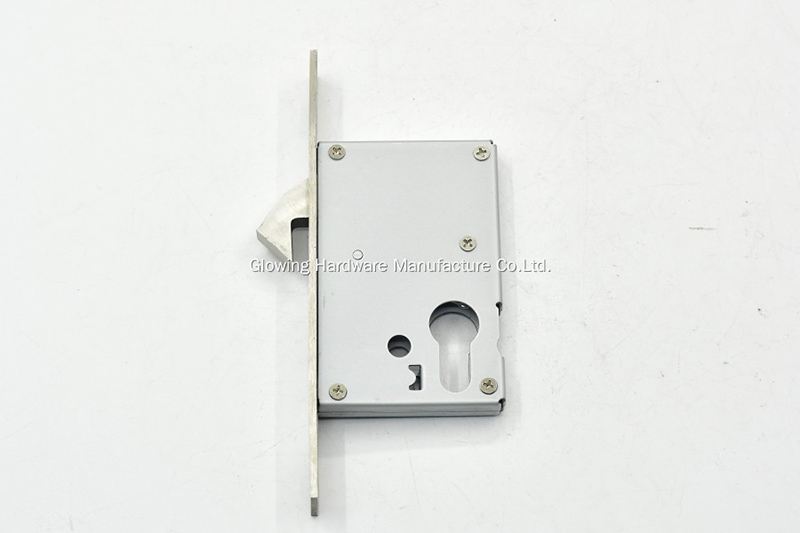
Commercial mortise lock replacement is easiest when you match critical dimensions rather than guessing from appearance. Key parameters include backset, case height, faceplate size, spindle type, and cylinder format.
For project work or multi-door standardization, sourcing a durable mortise lock that matches existing prep reduces labor, avoids field modification, and improves long-term maintenance consistency. If you have non-standard trim footprints or special functional requirements, a custom mortise lock specification can prevent fit compromises.
You can review Glowing Hardware options on our mortise lock product page to align function and prep requirements.
To remove a commercial mortise lock safely, work in a clear sequence: remove levers and trim, release the cylinder or thumbturn components, then extract the lock case from the door edge. Avoid force, protect the door prep, and keep spindles, tailpieces, and screws organized for accurate reassembly. After removal, inspect alignment and pocket condition so the replacement performs smoothly and does not repeat the original failure symptoms.
If you are maintaining multiple openings, planning a retrofit, or need help matching door prep to the correct replacement, contact Glowing Hardware. Share your door type, backset, faceplate dimensions, and required lock function, and we can recommend suitable mortise lock options and provide practical guidance to support a clean, reliable replacement.
Previous: