
A loose lever door handle may seem like a small hardware issue, but in daily use it quickly becomes a bigger problem. The handle starts to shake, the return action feels less stable, and over time the door no longer opens and closes with the same smooth control. In homes, this is inconvenient. In commercial entrances, villas, hospitals, and public buildings, it becomes a maintenance issue that affects both appearance and user experience.
In many cases, fixing a loose lever door handle is not complicated. The problem usually comes from loose fixing screws, movement in the spindle connection, wear in the internal return structure, or long-term stress on the handle base. But for many buyers, property managers, and project contractors, the real question is not only how to tighten the handle once. It is how to avoid the same problem happening again.
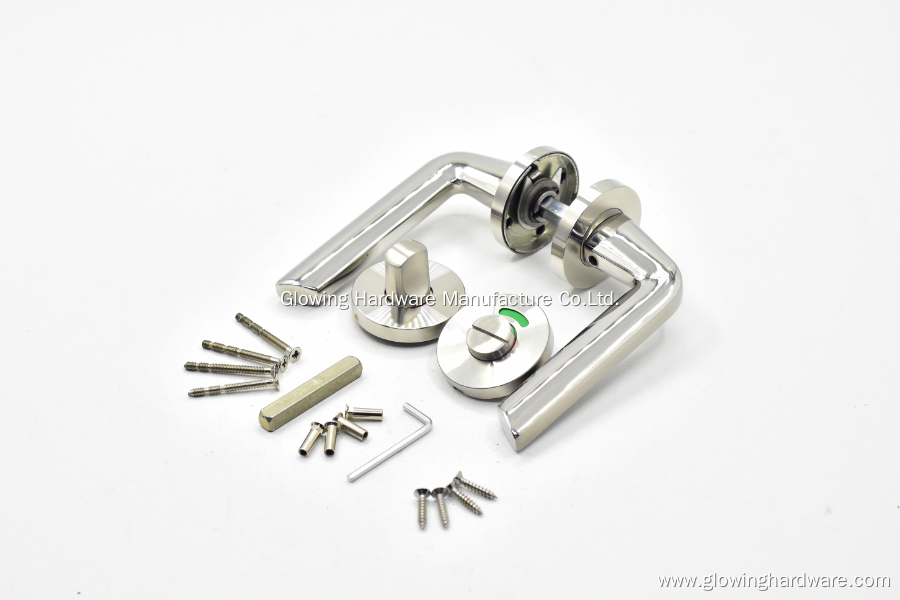
That is why this topic matters beyond a simple repair guide. A loose lever handle often shows that the hardware is no longer suitable for the door, the traffic level, or the environment. For entrance doors and public access points, buyers usually need a stronger and more stable handle system instead of another short-term fix. Our front Door Lever Handle connects naturally with this need because it is designed for higher-frequency use, stronger structural stability, and more consistent long-term operation.
A lever handle rarely becomes loose without reason. Most problems begin with repeated use. Every time the handle is pressed down and released, force travels through the lever, the spindle, the lock body linkage, and the mounting points. If one part starts to shift, the handle will gradually lose stability.
In lighter-use interior doors, this may take a long time to become obvious. In entrance doors, hospital passageways, villas, and public buildings, the wear usually appears faster because the handle faces heavier pulling force and more frequent operation. Moisture, cleaning chemicals, and small installation deviations can also speed up the problem.
This is why a loose handle is often not only a screw issue. It can also be a sign that the product structure, material, or fitting tolerance is not strong enough for the application. For project buyers, this matters because repeated loosening means repeated labor cost.
The first step is to identify where the movement is happening. Some handles wobble at the rose because the fixing screws behind the decorative cover are no longer tight. Others feel loose at the lever neck, which usually means the set screw or internal connection point needs adjustment. In more serious cases, the spindle and linkage are already worn, so tightening the outer screws only improves the problem for a short time.
A proper repair usually starts by removing the decorative trim, checking the fixing screws, and tightening them evenly so the handle base sits flat against the door. After that, the spindle connection should be checked to make sure the lever engages the lock body correctly. If the handle still sags or shakes after tightening, the issue may come from internal wear, not simple loosening.
This is one reason why many maintenance teams prefer hardware that uses a more stable spindle concept and tighter assembly control. A handle should not only be easy to tighten. It should also hold that tightness under repeated daily use.
Many loose lever handles seem fixed after a quick tightening, but the improvement does not always last. This usually happens when the underlying structure has already developed too much play. The screws can be tightened again, but if the mounting holes, return mechanism, or linkage points have worn down, the handle will start wobbling again after a period of use.
For homeowners, this is frustrating. For distributors, contractors, facility managers, and project buyers, it creates a repeat maintenance problem. A front entrance handle that keeps loosening affects both labor planning and customer satisfaction. In hotels, hospitals, villas, and public-facing projects, visible hardware instability also lowers the overall impression of quality.
That is why many buyers stop treating a loose handle as only a repair issue. They start seeing it as a hardware selection issue.
A front door handle works harder than many people expect. It does not only operate the latch. It also supports pulling, pushing, partial door weight influence, and higher daily impact. If the handle is installed on an entrance door or a public access point, the performance requirement becomes even higher.
This is where a purpose-built front door lever handle makes a difference. Our product is designed for entrance doors and public access points rather than only light-duty interior use. The handle body uses stainless steel as the main material and is built around stronger operational consistency, stable rebound feel, and better structural support.
For B2B buyers, that distinction matters. A handle designed for higher-load applications helps reduce future maintenance calls, keeps the entrance looking more professional, and performs better in projects where hardware failure is more visible.
Material quality is one of the biggest differences between a handle that stays firm and one that keeps loosening. Lower-grade materials may save cost at the start, but over time they are more likely to deform slightly, lose surface quality, or allow internal parts to shift more easily. Once that starts, the handle will never feel as stable as it should.
Stainless steel offers a stronger base for long-term performance. Our front door lever handle is available in SS304 and SS316, which makes it easier for buyers to choose the right level for different climates and use environments. In humid, coastal, or high-cleaning spaces, this becomes especially important because corrosion resistance and surface stability also affect how long the hardware keeps its structure and feel.
For importers and project buyers, this is not only a material issue. It is a risk-control issue. Better material means fewer complaints, fewer replacements, and a more dependable hardware line.
When buyers replace a loose lever handle, they are usually not only solving movement. They are also trying to restore appearance consistency. A poorly matched replacement can make the entrance look unfinished even if the handle works well. This is especially true on front doors where people see the hardware immediately.
That is why finish flexibility matters. Our product supports a wide range of surface finishes, which helps buyers match different front door styles and project requirements more easily. At the same time, size customization based on drawings or samples makes replacement and project coordination more practical, especially when the door thickness, lock body, or mounting structure is not fully standard.
For wholesalers, estate project developers, and door factory customers, this flexibility is useful because no two projects are exactly the same. A handle line that can adapt to different technical and visual requirements is much easier to sell.
A loose lever handle may begin as a maintenance issue, but in B2B supply it quickly becomes a broader sourcing question. Buyers need to consider repeat order consistency, installation efficiency, packaging protection, MOQ, and whether the supplier can keep the same structural standard in volume production.
This is often where problems appear. A sample may feel solid, but bulk production may vary in tolerance, assembly stability, or surface quality. That creates site complaints and increases installation time. Professional buyers therefore tend to evaluate the supplier just as seriously as the product itself.
Our product is positioned for this kind of project cooperation. It supports customization by drawing or sample, offers export packaging, and is supplied with project-oriented production logic that can work for door factories, project developers, traders, and other B2B customers. With an MOQ of 300 sets and a typical lead time of 35 to 40 days, it is more suitable for structured purchasing than for random one-off retail replacement.
In many cases, buyers are not only replacing one loose handle. They are building or upgrading an entire hardware line. This is where OEM and ODM support become important. Some buyers need a custom handle length, a specific base size, or a finish that fits a door collection already in the market. Others need a design direction that helps them stand out in their own region.
Our front door lever handle supports customization in dimensions and surface treatment, which makes it easier to align with different project styles and market demands. This gives distributors, importers, and private label buyers more room to create a stronger product offering without developing every detail from the beginning.
In competitive sourcing, that kind of flexibility often matters more than chasing the lowest price. Buyers need hardware that can support both technical fit and market position.
A strong handle still depends on correct installation. If the spindle is not aligned, if the mounting points are uneven, or if the fixing screws are over-tightened on one side and under-tightened on the other, the handle may start to loosen earlier than expected. That is why installation clarity matters as much as hardware quality.
Our product uses a standardized square spindle concept and a more modular mounting logic, which helps improve installation consistency. This is useful for project teams because better installation repeatability reduces variation across doors and lowers the risk of future wobbling caused by poor fitting.
For public buildings and commercial entrances, that advantage becomes more important because one project may include many doors, and small hardware inconsistencies add up quickly.
So, how do you fix a loose lever door handle? In simple cases, the answer is to tighten the fixing points, check the spindle connection, and confirm that the internal mechanism is still working correctly. But if the looseness keeps returning, the real solution is often not another quick repair. It is choosing a handle with stronger material, better structural stability, and more suitable application positioning.
Our front door lever handle fits well into that next step. It combines stainless steel durability, project-friendly customization, multiple finish options, and support for OEM and ODM cooperation. For distributors, contractors, importers, and project buyers, it offers a more practical solution for entrance doors and high-use access points where stability matters over the long term.
If you are reviewing handle options for a replacement program, a new hardware line, or an engineering project, contact us anytime. We can help you compare suitable materials, finishes, and customization details, and recommend a lever handle solution that is easier to maintain, more stable in use, and better matched to your market.