
When people search for how to open a lockes handle door, they are usually dealing with one of two situations. The first is simple daily use, where the door handle works together with a latch or Mortise Lock and the user just needs to unlock and open it correctly. The second is a problem situation, where the handle feels stuck, the latch does not return smoothly, or the lockset no longer responds as expected. In both cases, the right answer depends less on force and more on understanding how the handle and lock are meant to work together.
That is especially true with timber doors in homes, villas, hospitals, and commercial interiors, where the handle is not only a decorative item. It is part of the full door-control system. A good lever handle should feel smooth in the hand, match the lock body correctly, and keep performing under repeated daily use. Our timber door handle direction fits this topic naturally because it is designed as a stainless steel hollow special-shape lever handle set used with a washroom or interior functional mortise lock, together with a thumb-turn and indicator. In practical use, that means the user opens the door by the handle and secures privacy through the thumb-turn function, rather than relying on a complicated opening method.
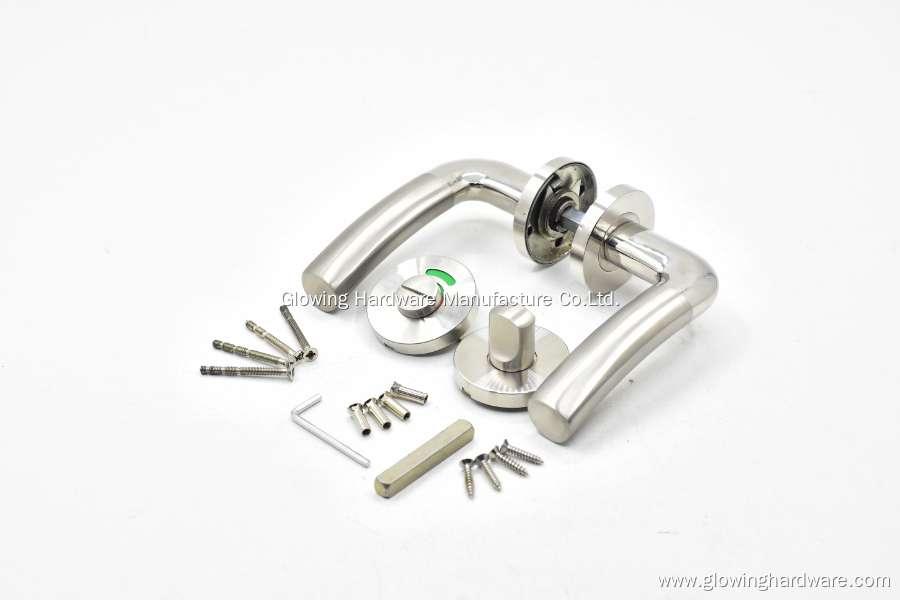
The biggest mistake people make with a locked handle door is trying to force the handle before checking what type of lock they are dealing with. A standard passage handle, a privacy handle, and a mortise lock handle do not work in the same way. If the door uses a thumb-turn and indicator system, the opening action is usually straightforward when used as intended. If the door is truly locked, pushing harder on the handle does not solve the problem and may damage the hardware or the latch connection.
In everyday use, the correct approach is to first confirm whether the door is only latched, privacy-locked, or fully engaged through the lock body. That sounds basic, but in homes, public toilets, hospital rooms, and interior project spaces, many handle complaints come from misunderstanding the locking function rather than from product failure. For B-end buyers, this matters because user confusion often becomes an after-sales issue. A better handle-and-lock match can reduce unnecessary service calls later.
A door handle does not operate on its own. It depends on the internal lock body, spindle connection, and the return action of the spring mechanism. If any of these parts are mismatched, the user may feel that the door is hard to open even when the handle itself looks fine from the outside.
That is why experienced buyers usually treat door handles as part of a system rather than as a single decorative product. A well-made lever handle should work smoothly with the mortise lock, and the dimensions of the rosette, spindle, and handle body should all be consistent with the intended door thickness and use scenario. Our handle set follows this type of system logic, combining the lever handle with a thumb-turn and indicator and intended use with a washroom or functional mortise lock for timber door applications. This makes the handle more useful in real interior-door projects than a purely visual handle with no lock compatibility planning behind it.
When a handle door becomes difficult to open, the problem is often related to wear, alignment, or poor installation rather than the visible handle body itself. A timber door can shift slightly with humidity or long-term use, and that shift may put more pressure on the latch. In other cases, loose fasteners, a dry lock body, or a worn spindle connection can make the opening action feel stiff or unreliable.
This is why maintenance matters. A handle may still look attractive on the door while the inside of the system is already under strain. In normal care, the surface should be cleaned with a soft damp cloth, fasteners should be checked regularly, and the lock cylinder or internal lock action should be kept running smoothly with proper maintenance. These are small steps, but they often prevent the user from reaching the point where the door suddenly feels locked or difficult to operate in daily use.
A handle is touched every day, often many times a day, so material choice has a direct effect on long-term user experience. In humid spaces such as washrooms, bathrooms, and healthcare interiors, corrosion resistance becomes even more important. That is why stainless steel remains a practical choice for timber door handles in these environments.
Our handle direction supports this kind of use because it offers SS304 and SS316 material options with multiple finish choices such as satin, polished, PVD, and other customized surface directions. For buyers, that flexibility matters because not all projects need the same balance of appearance, durability, and environmental resistance. A villa entry, a hospital washroom, and a commercial conference room may all need similar handle logic, but not the same final finish.
In many projects, especially public or semi-public interiors, the easiest door to open is simply the one that is easiest to understand. If the user can see how the handle works, recognize whether the thumb-turn is engaged, and open the door naturally, the whole door system feels better. This is one reason modern lever-and-indicator combinations remain popular in washroom and interior privacy-door settings.
For project buyers, this is not only a design point. It is also about reducing misuse. A handle that clearly signals lock status and opens smoothly through normal operation reduces confusion, lowers rough handling, and supports a cleaner user experience. In that sense, the right handle choice helps with both hardware performance and building usability.
For distributors, developers, and contractors, the real question is not only how to open one locked handle door. The bigger question is how to avoid handle problems across many doors after installation. That is why buyers usually care about consistency, material quality, finish stability, and whether the supplier can support project-specific requirements.
A dependable Door Handle Manufacturer should be able to support more than one standard style. Buyers may need customized handle sizes, finish changes, rosette adjustments, or packaging support for a private-label line. Our handle range supports size production based on sample or drawing, customized finishes, and OEM-oriented supply for door factories, supermarkets, project developers, traders, and similar B-end customers. For long-term procurement, that kind of supplier flexibility often matters more than choosing one handle only by appearance. (glowingindustry.com)
A lot of buyers assume OEM and ODM only matter for large, highly customized projects. In reality, even small adjustments can make a handle much more suitable for a certain market. One region may prefer a different finish tone. Another may need a different rosette style. A hospital project may need a more practical stainless option, while a residential line may prioritize design shape and feel.
That is why supplier capability matters. A handle supplier who can work from drawings, support finish development, and maintain consistency from sample to production helps buyers build stronger door-hardware programs. This is especially useful for companies building branded lock-and-handle lines or supporting timber door manufacturers that need matching hardware across several collections.
If a door truly cannot be opened through its normal function, the safest answer is not forced entry. It is to check the lockset condition, verify whether the privacy turn is engaged, inspect obvious alignment issues, and if necessary use qualified maintenance support. This is important in homes, hospitals, and commercial interiors where damage to the lock, frame, or door leaf can create bigger problems than the original issue.
For buyers, this also reinforces why well-made hardware is worth the investment. A smooth-operating handle set reduces the chance of sticking, misuse, and emergency service calls later. Over time, that saves more cost than choosing a weaker handle-and-lock combination at the start.
So, how to open a lockes handle door? In practical terms, the right answer starts with understanding the lock function, using the handle as designed, and checking alignment or maintenance issues before assuming the handle itself is the problem. A timber door handle should work as part of a clear, reliable system, not as an isolated piece of decorative hardware.
If you are sourcing lever handles for timber doors, washroom doors, villas, hospitals, or interior project lines, we can help you review material options, finish direction, and OEM or ODM requirements. Share your drawings, usage scenario, or market needs with us, and we can help you choose a handle solution that is easier to use, easier to maintain, and more dependable in long-term projects.