Corrosion on exterior door hinges is a common problem, especially in projects exposed to humidity, rain, or frequent use. Many buyers have experienced this situation: the hinge looks fine at the beginning, but after a period of use, small rust spots, surface dullness, or stiffness start to appear. Once this happens, it not only affects the door’s appearance but also increases maintenance work and customer complaints.
That is why more wholesalers and builders prefer using stainless steel butt hinge products for exterior doors. But avoiding corrosion is not just about choosing stainless steel. It comes down to selecting the right material, the right finish, and making sure the hinge fits the actual installation environment.
Exterior doors are constantly exposed to changing conditions. Rainwater, moisture in the air, temperature differences, and even hand contact over time all affect the hinge surface. In some areas, especially coastal or humid regions, the environment can accelerate corrosion much faster than expected.
In many cases, problems do not appear immediately. They build up gradually. A slight color change or small spot may not seem serious at first, but over time it can spread and affect the whole hinge. This is why experienced buyers pay more attention to hinge specifications before placing bulk orders.
One of the most important factors in preventing corrosion is the material itself. Not all stainless steel performs the same in outdoor use.
Our hinge can be made in SS201, SS304, or SS316, depending on project needs. For general exterior use, SS304 is often a stable and cost-effective option. For more demanding environments, such as areas with higher humidity or exposure, SS316 is usually the safer choice.
Many buyers try to control cost by selecting a lower grade, but in outdoor applications, this can lead to higher replacement costs later. For contractors and importers, it is often more practical to choose the right material from the beginning rather than deal with after-sales issues.
Material alone is not enough. The surface finish also affects how well the hinge resists corrosion and keeps its appearance.
Our hinges are available in finishes such as SSS, PSS, PVD, SN, CP, AB, ACM, PB, and SB. Different finishes behave differently under outdoor conditions. Some maintain their appearance better under sunlight and moisture, while others may change faster over time.
For projects where hardware needs to match across doors, handles, and locks, finish consistency becomes important. A hinge that performs well but looks inconsistent can still create problems for builders and distributors.
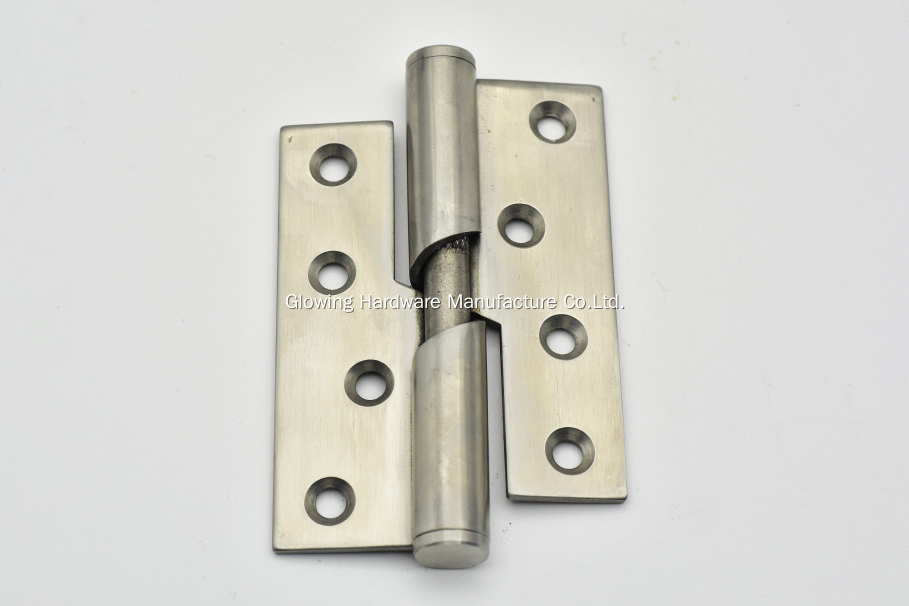
Besides material and finish, hinge structure also plays a role in performance. Our lift-off hinge design allows easier installation and removal, which can be useful in both construction and maintenance stages.
For project buyers, this means less handling stress during installation and easier adjustment if needed later. It also helps reduce the risk of damage caused by forced disassembly. In large projects, small details like this can save time and reduce unnecessary labor.
In many cases, corrosion does not start from the hinge itself but from the installation points. If the screws or surrounding hardware are not matched properly, corrosion can appear around those areas first.
Proper alignment, correct fixing methods, and compatible accessories all matter. This is why many buyers prefer working with suppliers who can provide basic technical support instead of only supplying products.
Clear communication before installation can help avoid problems that are difficult to fix after the doors are already in place.
Even with the right hinge, outdoor conditions will still affect long-term performance. Regular use, dust, moisture, and cleaning methods all play a role.
Simple maintenance, such as keeping the hinge clean and checking its condition periodically, can extend its service life. For property managers and contractors, this is a practical way to reduce long-term costs without adding complexity.
For wholesalers and project buyers, corrosion issues are not just technical problems. They affect business directly. If a batch of hinges performs poorly, it can lead to complaints, replacements, and delays.
This is why consistency in material, finish, and production matters as much as the product itself. Our hinges support customization based on drawings or samples, with controlled production for bulk supply. This helps buyers keep consistency across different orders and projects.
For importers and distributors, this kind of stability is often more valuable than short-term price differences.
Different exterior doors require different levels of performance. A side door in a residential project is not the same as an entrance exposed to harsher conditions. Choosing one standard hinge for all situations may seem simple, but it can create problems later.
A better approach is to select hinge specifications based on actual use. This includes material grade, finish, and structure. Buyers who take this step usually experience fewer issues after installation.
Avoiding corrosion on exterior door hinges starts with making better choices early. A reliable Stainless Steel Butt Hinge should match the environment, not just the price point. Material grade, surface finish, hinge design, and correct installation all work together to determine how well the hinge performs over time.
Our stainless steel lift-off hinge is built to support these needs, offering material options, flexible specifications, and stable supply for bulk orders.
If you are planning a project or reviewing hinge options, you can contact us for more details. We can help you check suitable materials, finishes, and specifications based on your actual application, and support you in making a more reliable sourcing decision.