
A door handle is one of the most essential yet often overlooked components of architectural design. It provides both function and form—allowing smooth door operation while contributing to the overall aesthetic of residential, commercial, and industrial spaces. Understanding how a door handle works helps in appreciating its mechanical design, material choice, and durability. At Glowing Hardware, we specialize in manufacturing Stainless Steel Door Handles that combine ergonomic design with precision engineering, ensuring long-lasting performance in any environment.
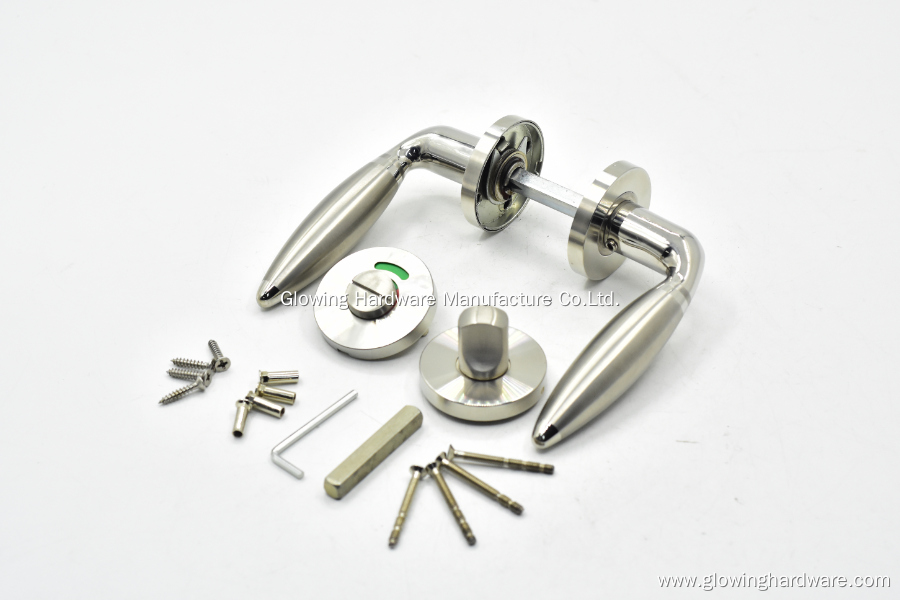
A door handle operates on a simple mechanical principle: rotation or pulling motion activates a latch or lock mechanism, allowing the door to open or close. When you press, turn, or pull the handle, an internal spindle transfers motion to retract the latch bolt inside the door.
Here’s a breakdown of the internal working system:
Handle Lever or Pull Bar: The visible part that the user grips to operate the door. It’s designed ergonomically for ease of use.
Spindle: A square rod that connects both sides of the handle through the door’s latch assembly. Rotating the handle turns this spindle.
Latch Bolt: A spring-loaded metal piece that extends into the strike plate on the door frame, holding the door closed.
Spring Mechanism: Ensures that after the handle is released, it returns to its neutral position automatically.
Strike Plate: A metal plate fixed to the frame that guides and secures the latch bolt when the door is shut.
When the handle is turned or pulled, the spindle rotates, retracting the latch bolt and freeing the door to swing open. Upon release, the spring returns the latch to its extended position, securing the door once again.
At Glowing Hardware, every stainless steel handle—whether tube lever, hollow style, or solid pull bar—is designed with precision so that each mechanical movement feels stable, smooth, and secure, even after years of heavy use.
Although door handles look simple externally, the internal components play a vital role in functionality and durability. Understanding each part helps explain how the mechanism maintains efficiency through daily operation.
| Component | Function | Material Used |
|---|---|---|
| Spindle | Transfers rotational force | Stainless steel |
| Latch Bolt | Holds door closed when not in use | Zinc alloy / steel |
| Return Spring | Resets handle after use | Tempered steel |
| Escutcheon / Rose | Decorative cover concealing the mechanism | Stainless steel / brass |
| Lever / Pull | User-operated handle part | Stainless steel |
| Mounting Screws | Secure handle assembly to the door | Stainless steel |
Our stainless steel door handle series incorporates solid or hollow stainless steel tubes combined with electro-polished finishes for corrosion resistance. The precise machining ensures that all moving parts align perfectly, minimizing friction and preventing premature wear.
Unlike cheaper alternatives made from iron or plated alloys, Glowing Hardware’s handles use premium-grade stainless steel (SUS304 or SUS316) that withstands oxidation, moisture, and physical stress, making them ideal for both indoor and outdoor architectural use.
Door handles vary by function, yet all operate on similar mechanical foundations—transmitting motion to release a latch. Understanding the differences between lever, knob, and pull types clarifies their mechanisms and applications.
These are the most common types, found in both residential and commercial environments. The lever turns around a central spindle to retract the latch bolt.
Mechanism: Rotational movement of the lever activates the latch.
Advantages: Easy to operate, ideal for accessibility compliance (ADA).
Typical Material: Stainless steel tube or solid lever, as offered by Glowing Hardware.
Used primarily on glass doors, metal doors, or public entrances, pull handles operate through direct pulling motion instead of rotation.
Mechanism: Pulling force disengages magnetic or roller catches instead of a latch.
Advantages: Simple, durable, and suitable for heavy-duty commercial applications.
Examples: Our Stainless Steel Door Pull Handles feature a minimalist cylindrical shape, combining aesthetic appeal with superior load-bearing strength.
These traditional handles require twisting to operate a spindle and retract the latch.
Mechanism: Rotational torque applied around the knob axis.
Advantages: Compact and symmetrical design, common in interior rooms.
At Glowing Hardware, we design each handle type to match its intended environment—lever models for ergonomic precision, pull models for architectural strength, and solid handles for modern commercial use.
The efficiency and longevity of a door handle depend heavily on material quality and structural integrity. Stainless steel has become the material of choice for high-end architectural hardware due to its balance of strength, aesthetics, and corrosion resistance.
Durability: Stainless steel’s tensile strength prevents bending or breaking under repeated use.
Corrosion Resistance: Especially in humid or outdoor environments, SUS304 and SUS316 stainless steel resist rust and oxidation.
Aesthetic Versatility: Polished, brushed, or satin finishes maintain a professional appearance over time.
Hygiene and Maintenance: Smooth stainless surfaces are easy to clean and resist bacterial accumulation.
At Glowing Hardware, our door handles undergo precision tube welding, electro-polishing, and surface brushing, resulting in a smooth, scratch-resistant finish. The seamless connection between handle tube and mounting base ensures not only a refined look but also superior strength for public-use environments such as airports, hospitals, and offices.
In many doors, the handle mechanism is integrated with a locking system for added security. The synchronization between handle and lock ensures controlled access without compromising smooth operation.
Latch Function: Allows free operation of the handle for daily use.
Deadbolt Mechanism: Engaged manually or electronically to secure the door when needed.
Spring Return Mechanism: Automatically resets the handle after operation to prevent accidental latch retraction.
Backplate or Rose System: Conceals the screws and connects to the latch housing, ensuring mechanical alignment.
In Glowing Hardware’s modern stainless steel handle series, compatibility with multiple locking systems is a key advantage. Whether paired with a Mortise Lock, cylinder lock, or glass Door Latch, our products are engineered for universal installation. The smooth motion of the lever or pull handle aligns seamlessly with the internal latch structure, guaranteeing a silent, effortless experience every time.
Proper care and regular inspection can significantly extend the operational life of any handle, especially in high-traffic environments.
Regular Cleaning: Wipe the stainless steel surface with a soft cloth and mild detergent to remove fingerprints and residue.
Lubrication: Apply silicone-based lubricant to the spindle and latch mechanism every 6–12 months for smoother operation.
Tighten Mounting Screws: Check periodically for any loosening caused by repeated use.
Avoid Abrasive Cleaners: Harsh chemicals can dull the surface finish and cause corrosion over time.
Inspect for Damage: Look for signs of looseness or sticking that might indicate internal wear.
The stainless steel door handles from Glowing Hardware are designed with low-maintenance requirements. Thanks to the material’s corrosion resistance and strong structural design, users can enjoy long-lasting performance without frequent replacements.
A door handle’s working mechanism represents the perfect balance between mechanical engineering and user comfort. Each motion—from the rotation of a spindle to the snap of a latch—depends on precision design and quality materials.
At Glowing Hardware, we combine advanced manufacturing with thoughtful design to produce stainless steel door handles that operate smoothly, look elegant, and endure heavy use in modern architectural spaces. Whether you choose a tube lever, hollow style, or solid door pull, our handles are engineered to deliver reliability and sophistication in every detail.
Explore the full range of Stainless Steel Door Handles by Glowing Hardware to experience the craftsmanship and mechanical excellence that define our commitment to quality.
Previous: How To Fix A Loose Door Handle