The number of hinges required for a door is one of the most important considerations in both residential and commercial construction. A door that lacks sufficient hinge support can sag over time, scrape the floor, or fail to close properly. Meanwhile, a door that uses the correct number of hinges will open smoothly, bear weight efficiently, and maintain long-term structural integrity. Understanding how many hinges a door should have involves more than following a simple rule—it requires evaluating door height, weight, frequency of use, and installation environment.
At Glowing Hardware, we manufacture premium stainless steel door hinges designed for architectural projects, hotels, commercial buildings, and residential spaces. Our hinges are engineered for durability, smooth rotation, and high load capacity, making them suitable for both standard and heavy-duty door systems. This article provides a detailed explanation of how many hinges per door are required and how to determine the right hinge configuration for different applications.
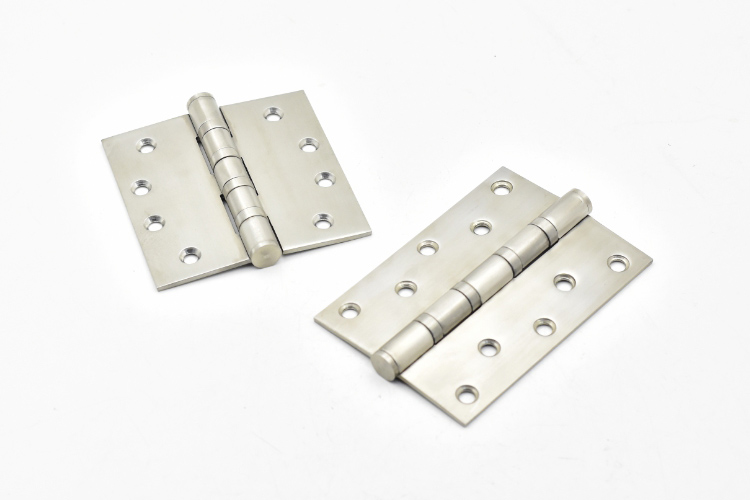
The number of hinges installed on a door directly affects its longevity, performance, and safety. Hinges function as the pivoting mechanism that carries the entire weight of the door. Without proper support, the door may bend, warp, or detach from the frame. In high-traffic environments such as hotels or public buildings, hinge performance becomes even more crucial because the door experiences constant motion and stress.
A properly installed hinge system ensures:
Even weight distribution, preventing door sagging
Smooth and controlled opening, reducing strain on users
Extended lifespan, minimizing maintenance costs
Improved security, preventing forced entry or displacement
Structural stability, especially for fire doors and heavy commercial doors
At Glowing Hardware, we design hinges with precision-centered bearings, thick stainless steel plates, and corrosion-resistant finishes to maintain performance even under frequent use. Our products are widely used in hospitality, engineering projects, and architectural applications, where dependable hinge systems are essential.
While industry standards offer basic recommendations, the correct number of hinges depends on multiple factors. The most common guideline is based on door height, which serves as the foundation of hinge selection in most building projects.
The following table summarizes general hinge usage based on door height:
| Door Height | Recommended Number of Hinges | Application Notes |
|---|---|---|
| Up to 2100 mm (2.1 m) | 2 hinges | Suitable for lightweight interior wooden doors |
| 2100–2400 mm | 3 hinges | Recommended for most interior and exterior doors |
| 2400–3000 mm | 4 hinges | Required for tall, heavier, or commercial-grade doors |
| Above 3000 mm | 5+ hinges | For oversized or specialty architectural doors |
Most residential interior doors fall into the 2–3 hinge category. However, commercial doors, fire doors, and metal doors almost always use 3 hinges minimum due to higher weight and safety requirements.
While height offers a helpful starting point, it should not be the only determining factor. Other essential considerations include:
Door Weight
Material Type (wood, steel, glass-composite)
Door Thickness
Frequency of Use
Environmental Conditions (humidity, corrosion exposure)
Glowing Hardware’s stainless steel hinges are designed to handle a wide range of weights and environmental conditions, making them ideal for both indoor and outdoor installations.
Door weight significantly affects how many hinges are necessary. Heavy doors require more hinges not only for support but also to maintain proper alignment during operation. Various materials affect door weight differently, and the hinge system must match these characteristics.
Lightweight doors such as hollow-core wood doors or MDF interior doors can operate efficiently with 2 hinges if they do not exceed standard height and weight. These doors typically weigh between 10–20 kg and are used in bedrooms, closets, and small offices.
Solid wood, composite, or insulated exterior doors typically weigh between 25–45 kg. These doors require 3 hinges to ensure smooth operation and to prevent long-term sagging. Houses, hotel rooms, and commercial offices commonly use this configuration.
Doors made from steel, thick hardwood, fire-rated materials, or glass can weigh 50 kg or more. These doors often require 4 or more hinges to carry the load safely and to prevent stress on the top hinge.
Glowing Hardware produces heavy-duty stainless steel hinges specifically designed for these types of installations. Our hinges feature:
Thickened steel plates
High-strength pivot pins
Ball-bearing rotation
Anti-corrosion polishing
High load-bearing capacity suitable for oversized doors
Humidity, salt air, and temperature changes can cause fasteners and hinges to deteriorate. Stainless steel hinges—like those from Glowing Hardware—offer far better durability than iron or brass alternatives in harsh environments, making them ideal for coastal, outdoor, or commercial spaces.
In modern architectural and commercial spaces, not all doors follow standard dimensions or usage patterns. Specific door types require additional hinges to ensure safety and compliance.
Fire-rated doors are typically heavier and must maintain structural alignment during emergencies. Regulations often require:
3 hinges minimum, with some models needing 4
Fire-resistant hinge materials
Heat-resistant bearings or pins
Glowing Hardware offers fire-door-grade stainless steel hinges engineered to withstand heat, pressure, and deformation.
Doors in hotels, hospitals, airports, and restaurants experience constant movement. The repeated force caused by frequent opening and closing requires additional reinforcement.
3–4 hinges recommended
Ball-bearing hinges preferred for smooth, long-term performance
Large wooden entrance doors, gallery doors, or custom architectural doors can exceed 3 meters in height or 80 kg in weight.
4–5 hinges ensure balanced load distribution
Heavy-duty materials essential for long-term stability
Glowing Hardware supplies customizable stainless steel hinges suitable for hotel lobbies, office buildings, and custom engineering projects.
Steel doors often come with added layers for insulation or security.
Minimum 3 heavy-duty stainless steel hinges
Anti-pry and anti-rust features recommended
Our hinges are treated with advanced coating technology to resist corrosion, ensuring longevity even when exposed to outdoor moisture and temperature fluctuations.
At Glowing Hardware, we do more than supply hinges. We provide comprehensive engineering solutions for architectural and hospitality projects. Our hinge products are customized to meet client needs, and our service system ensures long-term support from selection to installation.
We serve clients in:
Hotel construction
Commercial building projects
Public infrastructure
Residential developments
Our hinge products meet strict durability, appearance, and safety requirements demanded by high-end architectural installations.
We provide:
Customized hinge size and thickness
Special load-bearing configurations
Finishing colors (brushed, polished, matte)
OEM packaging and branding
Our technical team designs hinge solutions tailored to door size, door weight, and project specifications.
We offer:
Door hinge installation tutorials
Detailed positioning diagrams
On-site installation guidance for engineering clients
Correct installation increases hinge longevity and prevents door misalignment.
If clients encounter issues such as:
Door sagging
Misalignment
Unusual noise
Insufficient hinge load capacity
Glowing Hardware provides professional diagnosis and effective solutions.
We help clients create customized Door Hardware systems, including:
Door hinges
Door handles
Locksets
Sliding solutions
Architectural hardware packages
Our goal is to deliver durability, precision, and aesthetic consistency across all hardware components.
Determining how many hinges a door needs is essential for ensuring safety, performance, and long-term stability. Standard interior doors may use 2–3 hinges, but heavier, taller, or frequently used doors often require 4 or more to distribute weight effectively. By considering door height, material, weight, and application environment, you can select the correct hinge configuration with confidence.
At Glowing Hardware, our stainless steel door hinges are designed for demanding commercial and architectural use. Combined with our professional OEM services, installation support, and technical solutions, we ensure every project receives the right hinge system for lasting performance.
For durable, high-precision hinge solutions built for modern construction needs, Glowing Hardware remains your trusted partner—from design to installation and beyond.