A door that does not close properly is more than a minor inconvenience. In commercial buildings, hotels, and architectural engineering projects, improper door alignment affects safety, energy efficiency, noise control, and the professional appearance of the space. Most door-closing issues stem from hinge misalignment, worn hardware, or uneven door weight distribution. Understanding how to adjust door hinges correctly restores smooth operation and prevents premature wear on locks, frames, and door cores. For long-term performance, many professionals choose Glowing Hardware’s stainless steel door hinge—a durable solution engineered for high-frequency use, structural stability, and precise alignment.
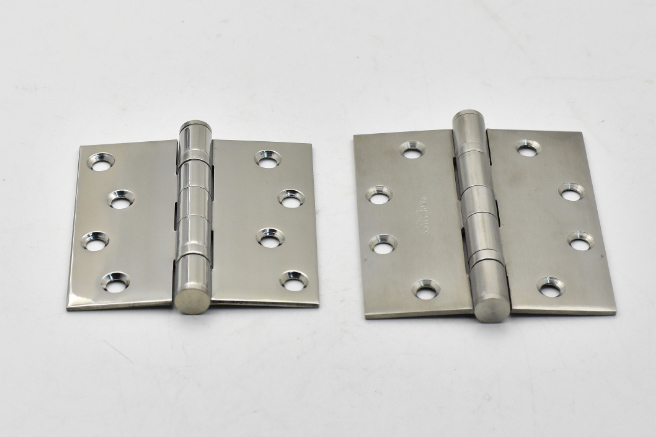
The hinge is the structural pivot point of a door. Even slight deviations in hinge angle, screw tension, or leaf depth change the door’s movement. When hinges loosen or shift over time, gaps appear along the frame, the latch may no longer align with the strike plate, and the door might rub against the jamb or floor. Heavy commercial doors exaggerate these problems, making proper hinge adjustment essential.
Hinges control:
Door swing direction and smoothness
Vertical alignment and door height
Horizontal placement and gap uniformity
Latch engagement and sealing performance
Architectural projects, hotel rooms, and commercial halls rely on precise hinge placement to ensure quiet, seamless operation. Glowing Hardware’s stainless steel door hinge is designed with engineered tolerances that maintain alignment even after thousands of opening cycles.
Before adjusting a hinge, it is important to identify the source of the closing issue. Many symptoms point directly to hinge alignment problems.
A door may:
Rub against the frame near the top
Scrape the floor near the bottom
Bounce back instead of latching
Fail to align with the strike plate
Sag visibly when opened
Each of these issues suggests a different hinge-related cause. Sagging typically occurs when the top hinge loosens. Rubbing near the latch often means the middle or bottom hinge has shifted outward. Commercial environments—especially hotels—experience repeated door cycles daily, making these adjustments necessary for operational consistency.
Inspection reveals whether hinges are loose, bent, or worn. The installer should check for stripped screw holes, hinge leaf gaps, or movement between hinge knuckles. Debris or old paint can also restrict hinge motion.
High-quality stainless steel hinges like the Glowing Hardware stainless steel door hinge resist bending and corrosion, offering more predictable adjustment results.
| Issue Observed | Possible Cause | Suggested Action |
|---|---|---|
| Door sagging | Loose top hinge | Tighten screws or reinforce holes |
| Door rubbing frame | Hinge leaf not flush | Re-seat or adjust hinge |
| Latch misalignment | Strike plate off-center | Shift hinge or adjust frame |
| Door not closing fully | Hinge binding | Clean, lubricate, or reposition hinge |
| Scraping floor | Door tilt | Raise bottom hinge / tighten top hinge |
Most door alignment problems can be solved by tightening screws. Over time, screws loosen due to door weight, humidity expansion, or repeated use. Tightening all hinge screws ensures the hinge leaves sit firmly against the door and frame.
If screws no longer anchor firmly, reinforcement is needed. Wooden frames may require dowels or wood filler to create new gripping structure. Metal frames may require alternative screw types. For heavy doors, replacing worn hinges with stronger stainless-steel models from Glowing Hardware’s stainless steel door hinge line ensures long-term resistance to loosening.
If tightening screws alone does not fix the problem, adjusting hinge placement becomes necessary. Re-seating involves repositioning the hinge slightly within the mortise or frame to correct alignment.
Examples of adjustments include:
Shifting the top hinge inward to raise the latch side of the door
Shifting the bottom hinge outward to reduce rubbing on the lower frame
Deepening the mortise slightly to allow the hinge leaf to sit flush
For precise alignment, installers often remove the hinge leaf, mark a corrected position, trim or adjust the mortise depth, and then reattach the hinge. In architectural engineering projects where accuracy is crucial, premium hinges like Glowing Hardware’s stainless steel models help ensure the hinge sits evenly without twisting or movement.
Door sag is a common issue and usually corrected by adjusting the top hinge. Because the top hinge supports the majority of the door’s weight, even slight loosening causes the door to drop toward the latch side.
Solutions include:
Tightening or replacing hinge screws
Using longer screws to anchor into structural framing
Adding reinforcement material where screw holes have expanded
Upgrading to high-load stainless-steel hinges
Commercial projects often upgrade worn brass or iron hinges to Glowing Hardware’s stainless steel door hinge to eliminate sag-related maintenance.
Sometimes the door closes but does not latch properly. Instead of modifying the lock or strike plate immediately, hinge adjustments should be attempted first. Moving the hinge slightly upward, downward, inward, or outward can realign the latch with the strike plate.
Only if hinge adjustments fail should the strike plate be repositioned. Adjusting hinges first preserves the structural balance of the door and reduces unnecessary modifications to the frame.
If hinges are bent, corroded, warped, or unable to support the door’s weight, adjustment will not solve the problem. Replacement becomes necessary to restore proper alignment.
stainless steel hinges offer superior longevity, stability, and endurance, especially in commercial buildings, hospitals, schools, and hotels. Glowing Hardware’s stainless steel door hinge is engineered for such demanding environments, providing consistent performance and reduced maintenance.
The best way to prevent misalignment is to choose high-quality hinges at the beginning of a project. This is especially critical for:
Hotel renovation or new construction
Architectural engineering projects
Doors with high-frequency daily use
Heavy wooden or fire-rated commercial doors
OEM export production requiring high consistency
Glowing Hardware specializes in providing OEM services, installation guidance, and problem-solving support for engineering clients who prioritize durability and structural safety. Our stainless steel door hinge ensures stable pivot action and long-term resistance to deformation.
Adjusting door hinges to close properly involves careful inspection, tightening, repositioning, and sometimes hinge replacement. Because hinge alignment affects latch performance, door swing, and structural integrity, resolving hinge issues early ensures long-term reliability—especially in commercial or architectural projects. Painting or covering up hinge problems does not fix underlying issues; proper mechanical adjustment is essential.
For demanding environments where reliability matters, Glowing Hardware’s stainless steel door hinge provides a dependable, durable solution that minimizes misalignment over time. With professional hardware selection and correct adjustment techniques, doors will close smoothly, securely, and consistently throughout their service life.
Previous: How To Choose Door Hinges