
Front door pull handles are a defining element of modern entrance design, commonly used on residential homes, commercial buildings, and hospitality projects. Unlike traditional lever handles, pull handles operate through a simpler mechanical principle while offering greater flexibility in design and door configuration. Understanding how front door pull handles work helps architects, builders, and property owners choose the right hardware for durability, safety, and daily usability.
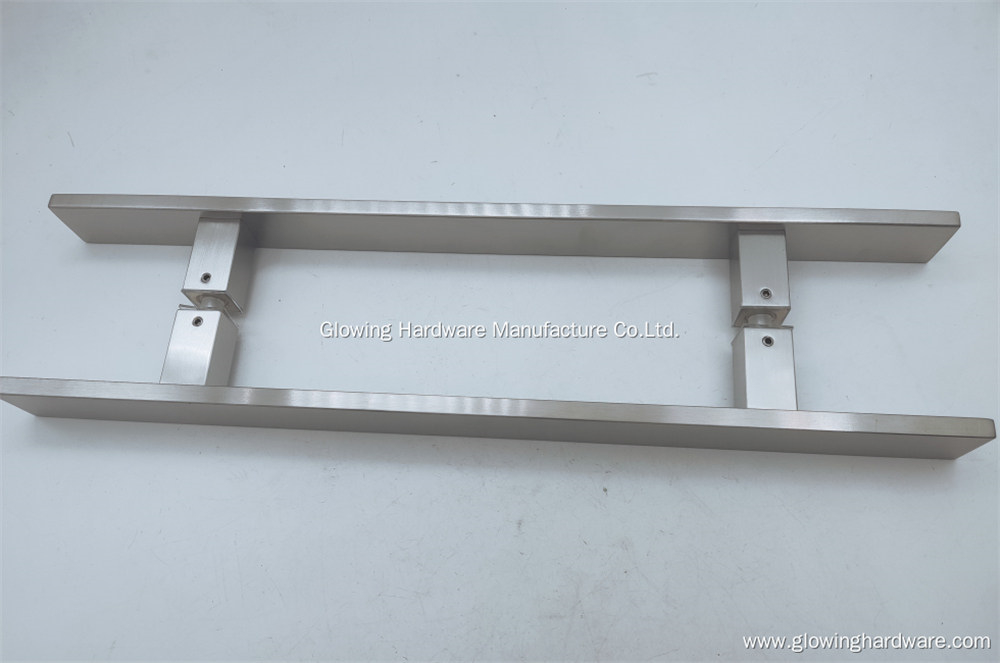
A front door pull handle works by providing a fixed grip point that allows the user to manually pull or push the door open. It does not engage a latch or locking mechanism by itself. Instead, it transfers force directly from the user’s hand to the door panel.
In most installations, the pull handle is mounted through the door using concealed bolts or threaded studs. When force is applied, the load is distributed across the handle body and mounting points, minimizing stress on the door surface. This direct-action design makes pull handles mechanically simple and highly reliable.
Pull handles are usually paired with separate locking systems such as Mortise Locks, electric strikes, or magnetic locks. The handle itself does not rotate or retract any internal components.
A typical configuration works as follows:
The user pulls the handle to open the door
The latch is released by a key, thumb turn, keypad, or access control system
The door moves freely once unlocked
This separation of functions allows greater freedom in hardware layout and is especially common on glass doors, pivot doors, and large-format entrance doors.
Although pull handles appear simple, their internal construction plays a major role in strength and stability. Most front door pull handles consist of a solid or tubular handle body, mounting studs, and internal sleeves or spacers.
Common mounting methods include:
Through-bolt fixing with internal washers
Concealed screw systems for clean aesthetics
Back-to-back mounting for double-sided doors
Proper mounting ensures the handle remains rigid under repeated pulling force, even on heavy entrance doors.
The material of a front door pull handle directly affects how it performs over time. Stainless steel is widely used because it offers high tensile strength, corrosion resistance, and dimensional stability.
From a mechanical perspective, quality stainless steel handles:
Resist bending under high pulling force
Maintain surface integrity under frequent contact
Perform reliably in indoor and outdoor environments
This makes stainless steel pull handles suitable for high-traffic entrances where consistent performance is required.
Front door pull handles support both pulling and pushing actions depending on door swing direction. Ergonomic spacing from the door surface allows users to apply force comfortably without straining the wrist.
Key functional advantages include:
Natural hand positioning
Easy operation for users of different heights
Reduced wear compared to rotating handles
Because there are no moving parts, the push–pull action minimizes mechanical failure and reduces long-term maintenance.
Pull handles are not limited to one door material or style. Their working principle makes them compatible with a wide range of door constructions.
Common door types include:
Glass entrance doors
Wooden front doors
Stainless steel or aluminum doors
Pivot doors and oversized panels
Each door type requires appropriate handle length, mounting depth, and fixing method to ensure proper load distribution.
How a pull handle works in practice depends heavily on correct installation. Misaligned mounting points or uneven tightening can cause stress concentration, leading to loosening over time.
Professional installation focuses on:
Precise drilling alignment
Even torque on mounting hardware
Proper spacing between handle and door surface
When installed correctly, the handle and door function as a unified system, ensuring smooth operation and long service life.
While all pull handles share the same basic working principle, design variations influence user interaction. Length, diameter, and offset from the door affect grip comfort and leverage.
For example:
Longer handles allow two-handed operation on heavy doors
Thicker profiles improve grip stability
Offset designs reduce finger contact with the door surface
These variations adapt the same mechanical concept to different usage scenarios.
Selecting a well-manufactured pull handle ensures consistent performance throughout years of use. Precision machining, material quality, and surface finishing all contribute to how effectively a handle performs its function.
Glowing Hardware develops stainless steel door pull handles designed to provide stable mounting, reliable load handling, and compatibility with modern entrance systems. These products are engineered to support everyday push–pull operation without compromising structural integrity.
Front door pull handles work through a straightforward yet highly effective principle: direct force transfer from the user to the door without internal moving mechanisms. Their reliability comes from solid construction, correct installation, and proper pairing with independent locking systems. By understanding how pull handles function and selecting appropriate materials and designs, entrance doors can achieve smooth operation, long-term durability, and a clean architectural appearance suitable for both residential and commercial environments.