
Selecting the correct pull handle size for kitchen cabinets is not only a design choice but also a technical decision that affects daily usability, installation accuracy, and long-term durability. In real kitchen projects, handle sizing must align with cabinet dimensions, user behavior, material strength, and installation conditions. This article will explain how to determine the right pull handle size for your kitchen cabinets.
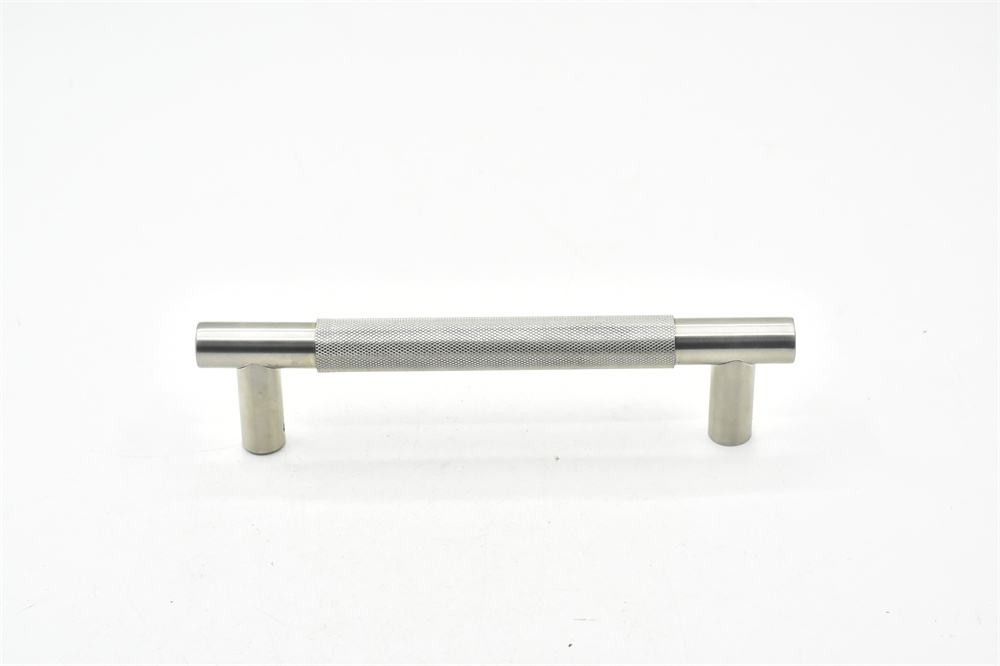
Kitchen Cabinet Pull Handles are load-bearing components that transfer hand force directly to cabinet doors and drawer systems. When the size is inappropriate, users may experience discomfort, uneven pulling force, or premature wear on hinges and slides.
From a professional perspective, handle size must account for cabinet width, door thickness, internal hardware layout, and usage frequency. Proper sizing improves ergonomics, reduces mechanical stress, and maintains consistent alignment across the entire kitchen system.
pull handles are defined by center-to-center hole spacing, which determines compatibility with cabinet drilling patterns. Understanding these standards allows for efficient production and accurate installation.
Typical size ranges include:
96 mm to 128 mm for small cabinet doors
160 mm to 192 mm for standard drawers
224 mm to 320 mm for wide drawers
400 mm and above for tall pantry doors or appliance panels
Professional projects often standardize two or three sizes to maintain visual consistency while meeting functional requirements.
Cabinet door width provides a reliable baseline for selecting handle size. Oversized handles can dominate narrow doors, while undersized handles reduce leverage on wider panels.
Professional sizing logic generally follows proportional balance rather than fixed rules. For example, wider doors benefit from longer handles to distribute pulling force evenly and reduce torsional stress on hinges. This approach improves both performance and visual harmony.
Drawers experience higher loads than doors, especially in kitchens where cookware, utensils, and food supplies are stored. Longer pull handles provide better leverage and allow users to pull from different positions.
From an engineering standpoint, longer handles reduce localized stress on drawer slides and mounting screws. This is especially important in high-usage kitchens, where durability and smooth operation are essential.
While aesthetics influence handle size, professional projects prioritize function first. Modern kitchens often favor long, linear pulls, while traditional kitchens use more compact options. However, style choices must still respect ergonomic and mechanical principles.
Design coordination typically involves:
Aligning handle length with cabinet layout grids
Maintaining consistent handle size within functional zones
Adjusting size only where cabinet dimensions require it
This balance ensures that visual design does not compromise usability.
Correct handle size must be supported by precise installation. Hole spacing, vertical alignment, and handle projection all influence how the handle performs in daily use.
Professional installation guidance focuses on:
Accurate drilling templates
Consistent handle height across cabinet runs
Even tightening to prevent deformation
Adequate finger clearance for comfortable grip
Without proper installation support, even correctly sized handles may fail to perform as intended.
As pull handle length increases, material quality becomes critical. Longer handles are subject to higher bending forces, especially on heavy drawers.
Stainless steel is widely specified for kitchen pull handles because it provides high strength, corrosion resistance, and dimensional stability. Well-manufactured stainless steel handles maintain rigidity across different lengths and resist loosening over time.
Glowing Hardware manufactures stainless steel door pull handles designed to perform reliably across a wide range of cabinet sizes, supporting both compact doors and large drawers without compromising structural integrity.
Correct handle sizing is rarely achieved by product selection alone. Professional support services play a key role in ensuring handles match real project conditions.
Glowing Hardware provides:
OEM customization to match specific cabinet dimensions and drilling standards
Design support to recommend appropriate handle lengths for different cabinet zones
Installation guidance to ensure accurate alignment and load distribution
Technical consultation to resolve project-specific challenges
These services help reduce installation errors and ensure consistent results across residential and commercial kitchens. If you have any needs, please contact us.
Common mistakes include choosing handle size based solely on appearance, using one size for all cabinets regardless of width, or ignoring drawer load requirements.
Professional best practices include:
Measuring cabinet widths before finalizing handle size
Differentiating sizes between doors and drawers when necessary
Maintaining consistency within functional areas
Considering long-term usage, not just initial appearance
These steps help avoid rework and improve user satisfaction.
The correct pull handle size for kitchen cabinets depends on cabinet proportions, drawer weight, material strength, and installation accuracy. There is no single universal size, but professional guidelines make selection predictable and reliable. By combining proper sizing principles with high-quality stainless steel hardware and professional support services, kitchen cabinets can achieve lasting functionality, comfort, and visual balance throughout their service life.
Previous: How To Fix A Loose Door Lock?