A door stopper is a small component, but it controls one of the most expensive problems in buildings: repeated door impact. When a stopper is set correctly, it prevents handles from striking walls, reduces hinge stress, and helps doors close quietly without bouncing. When it is set incorrectly, doors can still hit the wall, scrape the floor, or stop too early and leave an awkward opening angle that affects daily traffic flow. Adjusting a door stopper is usually simple, but the correct method depends on the stopper type and where it is mounted.
This guide explains how to adjust common door stopper setups, what to check before changing position, how to fix frequent issues, and how to keep the adjustment stable over time. The recommendations are aligned with Glowing Hardware solutions, including the Stainless Steel Door Stopper designed for long-term durability in residential and commercial projects.
Adjusting a door stopper usually changes one of three things.
The stopping point, meaning how far the door can open before contact
The contact height, meaning whether the stopper hits the door leaf, the handle, or the closer area
The impact absorption behavior, meaning how the stopper compresses and returns after contact
In practice, your goal is to stop the door at the safest point, protect the wall and hardware, and keep the door opening angle comfortable for users.
Most buildings use one of the following stopper styles. Adjustment methods differ because the mounting positions and contact points are different.
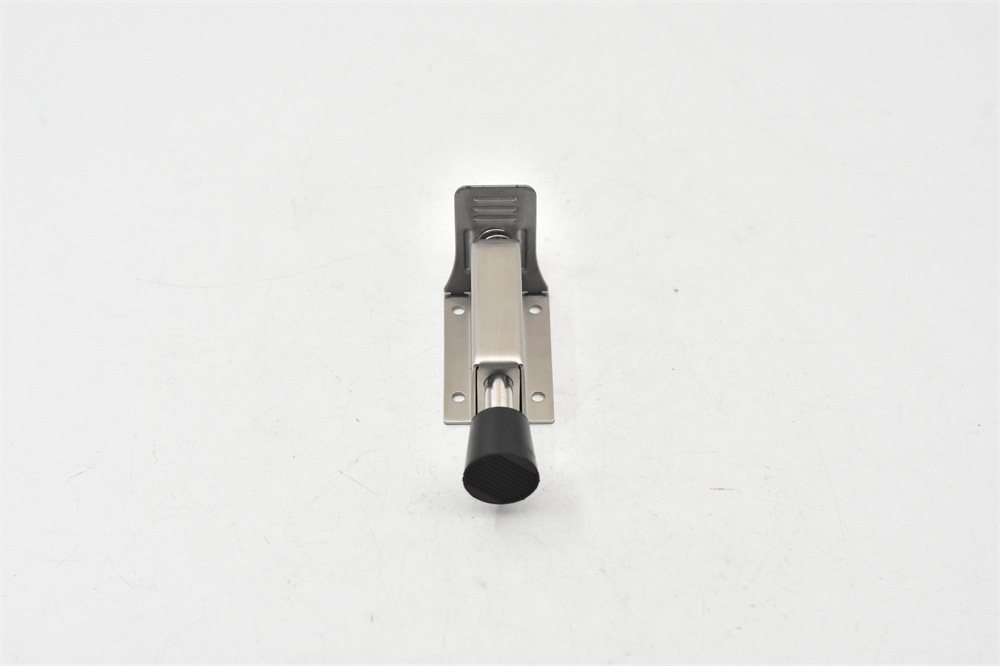
Floor-mounted door stopper
Installed on the floor and stops the door by contacting the lower part of the door or the door edge.
Wall-mounted door stopper
Installed on the wall, usually behind the door, stopping the door before the handle hits the wall.
Baseboard-mounted door stopper
Installed on trim or baseboard, common in renovations where floor drilling is avoided.
Hinge pin door stopper
Installed on the hinge, limiting opening angle by controlling hinge rotation.
If you are sourcing for projects, stainless steel stoppers are often selected because they hold position reliably and resist wear. Glowing Hardware provides stainless steel options through the Stainless Steel Door Stopper range for repeatable use in residential and commercial environments.
A floor-mounted stopper is usually adjusted by repositioning or changing its stop point relative to the door swing.
Confirm the strike point
Open the door slowly and observe what hits first. The stopper should contact the door leaf, not the handle, because handle contact can create higher leverage and damage both the handle set and the stopper over time.
Mark the ideal stop position
The ideal position stops the door before the handle approaches the wall. This is typically a few centimeters earlier than the maximum opening that would allow impact. Mark the floor location where the door leaf would touch the stopper.
Loosen the fastener and reposition
If the stopper is fixed with a screw, loosen it and shift the base to the marked point. If it is a fixed-location stopper and cannot slide, you may need to move the mounting point by re-drilling.
Tighten and test repeatedly
Open the door at normal speed several times. A good adjustment prevents wall impact while still allowing a natural entry path. If the door stops too early, users will push harder, causing vibration and loosening over time.
A stainless steel stopper is often preferred for floor mounting because it maintains alignment and resists deformation under repeated contact, which helps preserve adjustment accuracy.
Wall-mounted stoppers are adjusted mainly by changing the contact location on the wall so the door stops at a safe angle.
Check whether the stopper is aligned with the door handle
A common mistake is aligning it with the handle height but placing it too close to the hinge side. This can allow the handle to strike the wall even if the door leaf contacts the stopper. The correct placement depends on the door swing arc.
Identify the door leaf contact point
Open the door to the safe maximum angle and mark where the door leaf naturally approaches the wall. The stopper should be placed where the door leaf contacts, because leaf contact spreads force more evenly than handle contact.
Move the stopper to the correct height and distance
Adjusting height ensures the stopper touches a solid section of the door, not a decorative groove or weak panel area. Adjusting distance from the hinge side ensures the door stops before handle impact.
Secure fasteners firmly
Wall stoppers loosen when fasteners are not anchored properly. If the wall is drywall, using appropriate anchors improves long-term stability.
After adjustment, test with normal door opening force. A correctly placed stopper feels natural because the user does not notice it until it prevents the final impact.
Hinge pin stoppers limit opening angle through the hinge, so adjustment is about changing the angle setting.
Open the door and observe the current maximum opening angle
Adjust the stopper screw or control position to reduce or increase swing range
Test for clearance at nearby walls and furniture
Confirm the hinge remains smooth and does not bind under load
This type is useful when floor drilling is not allowed or when you want to control opening angle without visible floor hardware. It is important to ensure the hinge pin stopper does not force the hinge to carry excessive stopping load, especially on heavier doors.
The door still hits the wall
The stopper is usually positioned too close to the hinge side or it contacts the handle instead of the door leaf. Reposition so the leaf contacts earlier.
The door stops too early and feels inconvenient
The stopper may be too far from the wall or placed at a point that blocks natural door swing. Move it slightly to allow a wider opening while still preventing impact.
The stopper loosens over time
This often happens when fasteners are not tightened properly or when the mounting surface is weak. Re-check fastener seating, use proper anchors, and ensure the stopper base is flush and stable.
The door scrapes the floor after adjustment
This indicates the stopper is positioned in a way that changes the door’s movement path or forces the door into a low angle contact point. Reposition to a point where the door leaf remains level and free.
| Scenario | Best stopper contact | Adjustment focus | What to avoid |
|---|---|---|---|
| Residential bedroom | Door leaf contact | Quiet stop and wall protection | Handle impact on drywall |
| Hotel guest room | Door leaf contact | Stable alignment and repeat use | Loose anchors or early stop angle |
| Office corridor | Controlled open angle | Prevent full swing into traffic areas | Stopper placed in walking path |
| Bathroom door near vanity | Reduced opening angle | Protect fixtures and maintain clearance | Door opening into furniture |
This helps project buyers standardize placement logic across multiple rooms and door types.
In commercial environments, the stopper may take thousands of impacts over its service life. Stainless steel construction is commonly chosen because it resists deformation, maintains a stable body shape, and keeps a professional appearance with regular cleaning. A stable body helps keep the stopping point consistent, which is important when many doors must behave the same way across a building.
Glowing Hardware provides stainless steel stopper solutions through the Stainless Steel Door Stopper product range for buyers who want consistent performance, durable installation, and project-friendly procurement.
Adjusting a door stopper is mainly about setting the correct stopping point so the door leaf contacts safely before the handle reaches the wall. The best adjustment protects walls, Door Hardware, and nearby fixtures while keeping the opening angle comfortable for everyday use. Floor-mounted stoppers are adjusted through repositioning on the floor, wall-mounted stoppers through height and distance placement, and hinge pin stoppers through swing-angle control.
For durable long-term use in residential or project environments, Glowing Hardware offers reliable options through its Stainless Steel Door Stopper range, supporting consistent door protection and stable performance.