
A 12 foot Handrail looks simple on paper, but bracket spacing determines whether it feels rigid and safe or weak and shaky. The right bracket count depends on three things that matter in real installations: the handrail material and profile, the mounting surface strength, and the expected load in the space. When you calculate bracket quantity correctly, you reduce flex, prevent long-term loosening, and keep the rail aligned for years.
Glowing Hardware supplies complete handrail solutions through our Handrail range, with project-ready manufacturing, OEM/ODM support, and installation guidance services for contractors, hotels, and public buildings.
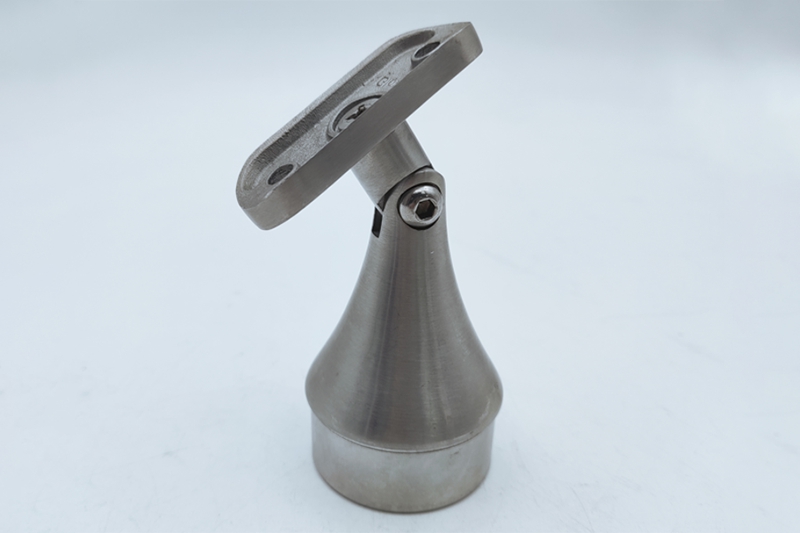
For a typical 12 foot handrail used in residential and light commercial spaces, installers commonly use:
Four brackets as a minimum practical baseline
This usually places brackets near both ends and distributes support across the span.
Five brackets for a stiffer, more professional result
This is the most common choice when the wall surface is unknown, the rail is thinner, or the space has heavier daily use.
Six brackets for high-traffic or heavier-duty handrails
This is recommended when the rail is mounted in corridors, stairwells, hotels, schools, or places where people frequently pull, lean, or rely on the rail for balance.
The goal is not just meeting a count. The goal is controlling deflection and avoiding stress concentration at the ends.
A 12 foot rail fails visually and functionally in predictable ways when spacing is wrong.
Excessive mid-span flex
When the span between brackets is too long, the center of the rail becomes a lever point. Users feel movement, which increases the chance of screws loosening over time.
End rotation and loosening
If the first bracket is too far from the end, people tend to pull on the end section and rotate the rail slightly. This repeated micro-movement wears the fixing points.
Misalignment and uneven gaps
Large spacing makes the rail sensitive to wall irregularities. Brackets cannot correct the rail line, so the finished look becomes wavy rather than straight.
Bracket count comes from spacing, and spacing comes from how the rail behaves under load. For most installations, these ranges are widely used in the field.
About 32 to 36 inches bracket spacing for general use
This range provides solid support for typical handrail profiles and helps the rail feel rigid during normal use.
About 24 to 30 inches for higher traffic or thinner rail profiles
Tighter spacing reduces flex and improves confidence for elderly users or high-use staircases.
Closer spacing at corners and transitions
Turns, end returns, and transitions concentrate force. Extra support near these points prevents rotation and rattling.
A 12 foot run is 144 inches. You can translate spacing into bracket quantity by dividing the length by the target spacing and then adding bracket positions for both ends.
These examples show how installers commonly convert spacing into bracket quantity.
Using around 36 inch spacing
A 12 foot run divided into roughly 36 inch segments results in about 4 brackets, placed with balanced intervals.
Using around 30 inch spacing
This often leads to 5 brackets, which gives noticeably better rigidity and better long-term stability.
Using around 24 inch spacing
This typically leads to 6 or more brackets, used in heavy-use conditions or when the mounting surface is less reliable.
Because real walls are not perfect, installers often choose the next higher bracket count if they are uncertain about studs, anchors, or wall condition.
A correct bracket count can still fail if placement is poor. These placement rules reduce complaints and call-backs.
Keep the first bracket close to each end
Many installers keep an end bracket within a short distance of the rail end so the end section cannot twist under load.
Keep spacing consistent across the run
Consistent intervals distribute forces evenly. Uneven spacing creates a weak point that will flex more than the rest.
Add a bracket near joints or splices
If the 12 foot rail is made from multiple pieces, support near the splice reduces bending stress and helps the joint stay tight.
Align brackets for a straight sightline
Even a strong handrail can look poor if brackets are slightly out of line. A straight centerline layout improves appearance and reduces side loading.
The same 12 foot length can require different bracket quantities depending on project conditions.
Rail material and wall thickness
Heavier, stiffer rails generally tolerate wider spacing. Thinner rails often need tighter bracket spacing to prevent bounce.
Wall type and anchoring method
Concrete and solid masonry can take strong anchors. Hollow drywall without studs requires specialized anchors or blocking, and usually benefits from more brackets for load distribution.
Use environment and user behavior
In hotels, corridors, stairs, and public facilities, people lean and pull more often. Choosing an extra bracket is often cheaper than handling future maintenance.
Handrail profile shape
A round profile can feel different than a rectangular profile of similar size. Some profiles resist bending better, which affects spacing tolerance.
This table gives a simple planning view for quoting and installation preparation.
| Installation condition | Typical spacing target | Typical bracket count for 12 ft | Practical reason |
|---|---|---|---|
| Residential stairs, normal use | 32 to 36 inches | 4 to 5 | Controls flex and end rotation |
| Light commercial, moderate traffic | 28 to 32 inches | 5 | Better rigidity and long-term stability |
| Hotels, schools, corridors, heavy use | 24 to 30 inches | 6 | Reduces bounce and loosening |
| Weak or uncertain wall substrate | 24 to 30 inches | 6 | Distributes load across more points |
| Spliced handrail sections | 24 to 32 inches with splice support | 5 to 6 | Keeps joints tight and aligned |
A handrail is a safety component, so bracket planning should match real project delivery needs. Glowing Hardware provides more than product supply.
Project-oriented OEM/ODM customization
We support hotel and building projects with OEM/ODM production, including specification matching, finish coordination, and hardware compatibility planning.
Installation guidance service
We help teams reduce mistakes in bracket spacing, end placement, and wall fixing approaches, which improves first-time installation success.
Design-to-sample capability for custom work
When projects require unique profiles, special bracket shapes, or finish matching, we can work from drawings and samples and support quick tooling cycles.
You can review available handrail options and coordinate bracket solutions through our Handrail product page.
Most 12 foot handrails use 4 to 6 brackets depending on spacing, wall condition, and expected use. Four brackets often fits basic residential needs, five brackets is a common professional standard, and six brackets is preferred for heavy traffic or uncertain wall substrates. The best result comes from balancing spacing, placing brackets close to ends, supporting joints, and matching anchors to the mounting surface. With Glowing Hardware handrail solutions, you can specify the rail and bracket plan together through the Handrail range and reduce installation risk on real projects.
Previous: Are Stainless Steel Door Hinges Better?