When buyers ask whether Stainless Steel Door Hinges are better, they usually mean one thing: will the door keep working smoothly without sagging, squeaking, staining the frame, or failing early in real-world use. The honest answer is that stainless steel hinges are often the better choice in high-humidity, high-traffic, and long-life projects, but the best hinge is still the one that matches the door weight, environment, and maintenance expectations.
Glowing Hardware supports Door Hardware projects with OEM/ODM customization, installation guidance, and solution-oriented support for hotels and construction projects. If you are sourcing matching door hardware for a complete opening set, our stainless steel product range can be reviewed here: Stainless Steel Door Handle.
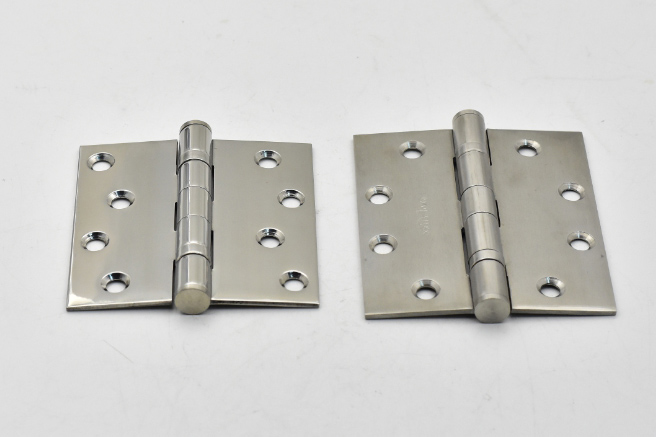
A hinge is a wear component. Every open-close cycle creates friction, micro-impact, and stress at the knuckle and pin. A hinge is considered better when it performs well in four areas at the same time.
Corrosion resistance in daily conditions
In humid areas or coastal environments, corrosion begins at edges, pin interfaces, and fastener points. stainless steel hinges generally resist rust staining better than many plated hinges, reducing the risk of brown streaks on painted frames and minimizing seizure at the pin.
Long-term alignment and sag control
Door sag is not just a door issue, it is a hinge-and-screw issue. A better hinge maintains knuckle geometry and pin stability so the door stays square. In heavy-use doors, stable hinge geometry reduces latch misalignment and helps locks close smoothly.
Lower maintenance burden
In public facilities, maintenance time is expensive. A hinge that stays stable reduces call-outs for squeaking, binding, door scraping, and latch adjustment. Stainless steel hinges often perform well in environments where cleaning chemicals and moisture are frequent.
Better performance for demanding applications
Certain projects need strong, consistent hardware performance over time, such as hotels, airports, and shopping areas. A hinge that resists corrosion and deformation is often preferred when the door is opened hundreds of times per day.
Different hinge materials solve different problems. This comparison helps buyers understand why stainless steel is often chosen.
Stainless steel vs plated steel hinges
Plated hinges rely on a surface layer for protection. In practice, scratches, edge wear, and pin movement can break the protective layer, allowing corrosion to start underneath. Stainless steel is corrosion resistant through the material itself, so light surface damage is less likely to become structural rust.
Stainless steel vs brass hinges
Brass hinges can look premium, but the best choice depends on traffic and environment. In some heavy-use applications, stainless steel hinges can offer higher resistance to mechanical wear at the knuckle and pin interface, especially when cleaning is frequent.
Stainless steel vs aluminum hinges
Aluminum hinges are often used when low weight is required, but for heavy doors or high-frequency use, stainless steel hinges are commonly preferred because they tend to offer better rigidity and stability under load.
Stainless steel hinges are typically considered the better option in these situations.
Bathrooms, kitchens, and humid indoor areas
Humidity, steam, and cleaning chemicals are constant. Stainless steel helps prevent corrosion marks and reduces the chance of pin binding caused by rust.
Coastal buildings and outdoor protected doors
Salt air accelerates corrosion. Stainless steel hinges are widely used in coastal projects where standard hinges fail early or stain surrounding surfaces.
Hotels and high-traffic commercial spaces
High open-close cycles increase wear. Stainless steel hinges are commonly selected to reduce maintenance frequency and keep doors closing smoothly.
Doors that need consistent appearance
If the project requires stable finish appearance with less risk of rust bleed, stainless steel becomes a practical choice for consistent long-term aesthetics.
Stainless steel is not always required. Some buyers over-specify and lose cost efficiency.
Low-use interior doors in dry environments
For bedrooms or storage rooms in low humidity, a well-made non-stainless hinge can perform well with proper sizing and installation.
Projects prioritizing lowest initial cost
If the door is light and the budget is strict, plated hinges can be acceptable if the environment is controlled and maintenance expectations are realistic.
When the real problem is door weight or frame condition
If the door is too heavy for the hinge size, stainless steel will not solve sagging. The hinge quantity, hinge size, screw anchoring, and frame reinforcement must be correct.
Material is important, but hinge performance also depends on engineering details and correct specification.
Door weight and width
Heavier and wider doors increase moment load at the hinges. The hinge size, thickness, and number of hinges must match the door weight. If not, sag and screw pull-out will happen even with stainless steel.
Pin design and tolerance control
Hinge smoothness depends on pin fit and knuckle alignment. Tight tolerance control improves swing consistency, reduces noise, and reduces metal wear over long-term cycling.
Screw anchoring strength
Many hinge failures are not hinge failures, they are screw failures. Screws must bite into solid wood framing or properly reinforced metal frames. In commercial projects, longer screws and correct pilot holes reduce loosening.
Environment and cleaning chemistry
If the building uses strong cleaners, chlorine-based products, or frequent wet wiping, corrosion resistance becomes a functional requirement, not a preference. Stainless steel is often chosen because it holds up better against repeated cleaning cycles.
| Decision factor | Stainless steel hinge advantage | Practical value in projects |
|---|---|---|
| Humidity and water exposure | Strong corrosion resistance | Reduces rust stains and pin binding |
| High traffic usage | Stable long-term performance | Fewer adjustments and call-outs |
| Cleaning chemical exposure | Better durability in routine cleaning | Maintains function and appearance longer |
| Door weight and size | Works well when properly sized | Helps maintain alignment under load |
| Budget sensitivity | Higher material cost | Better life-cycle value in demanding sites |
Many buyers are not just purchasing one component. They are completing a door hardware package for a project, and they need stable supply, customization, and coordination.
OEM/ODM customization for project requirements
Glowing Hardware supports OEM/ODM work for contractors and brands, including specification matching and customization for project delivery.
Installation guidance service
Correct installation prevents the most common failures like sagging, squeaking, and misalignment. Our support helps teams reduce installation errors that cause avoidable maintenance.
Solution-oriented support for hotel and construction projects
Project customers care about engineering experience and problem-solving ability, not only product supply. We support project coordination for hardware matching and practical installation outcomes.
If your project also needs matching stainless steel door hardware, you can review our related range here: Stainless Steel Door Handle.
Stainless steel door hinges are often better when the environment is humid, the traffic is high, or the project requires long-term stability with less maintenance. They resist corrosion more effectively than many plated hinges and can help keep doors operating smoothly when properly specified and installed. The best result comes from choosing the right hinge size and quantity for the door weight, using strong anchoring screws, and matching the hinge specification to the building environment and usage intensity.