
A door handle that feels solid, turns smoothly, and stays aligned over time starts with correct assembly. Even high-quality hardware can loosen, sag, or scrape if the latch, spindle, or through-bolts are installed incorrectly. This guide walks you through door-handle assembly in a practical, workshop-style sequence, with clear checkpoints to help you avoid common mistakes and get a professional result on the first try.
If you are sourcing durable, corrosion-resistant hardware for residential or commercial doors, you can reference our stainless steel handle solutions here: stainless steel door handle. Glowing Hardware focuses on stable fit, consistent machining, and dependable stainless steel options designed for long service life across different door environments.
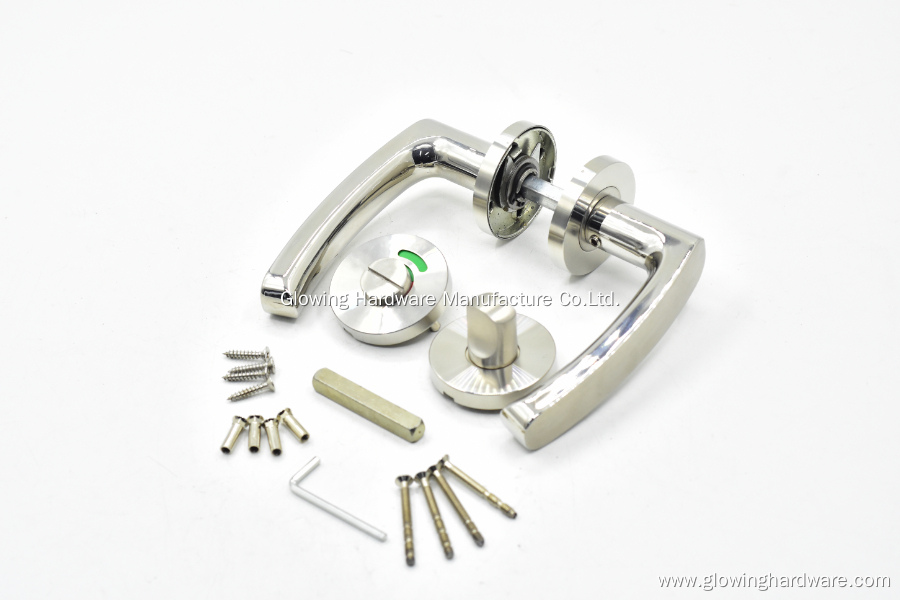
Most assembly issues happen because the handle set type is misunderstood. A quick identification saves time and prevents stripped screws or misaligned spindles.
Common configurations you may encounter include:
Lever handle on rose
A lever mounted on a round or square backplate. The latch is operated by a spindle passing through the door. This is one of the most common modern styles.
Lever handle on long plate
A lever mounted on an elongated plate. It may include a keyhole, privacy turn, or cylinder cutout depending on the lock format.
Passage, privacy, and keyed entry sets
Passage is non-locking, privacy uses a thumbturn or push button, keyed entry uses a key cylinder. Assembly steps are similar, but privacy and keyed sets add extra alignment points.
Even if the exterior design differs, the internal assembly typically revolves around the same core parts: latch, spindle, handle pair, mounting plate or rose, and fixing screws or through-bolts.
Before disassembling anything, stage all tools and components so you do not stop mid-installation with the door stuck open.
| Item | Purpose | Tip |
|---|---|---|
| Phillips screwdriver | Tightening mounting screws | Use the correct bit size to avoid cam-out |
| Flat screwdriver | Removing trim covers on some roses | Protect finishes with a thin card under the blade |
| Allen key set | Tightening lever grub screws | Use the exact size to prevent rounding |
| Tape measure | Checking backset and door thickness | Measure twice before drilling or tightening |
| Pencil or marker | Marking alignment | Light marks are easier to correct |
| Light lubricant | Reducing friction in latch | Use a non-staining product suitable for hardware |
Latch body with latch bolt and faceplate
Spindle, often square
Two handles or levers
Mounting plates or inner chassis
Roses or covers
Through-bolts or wood screws
Strike plate for the door frame
Optional privacy turn or key cylinder parts
If any part looks damaged or missing, do not force assembly. A handle should seat naturally without excessive pressure.
A secure handle assembly depends on correct fit between the latch and the door.
Most interior and exterior doors fall into a common thickness range, but do not assume. If the door is thicker than the hardware range, the through-bolts may not reach or the spindle may be too short. If the door is too thin, the handle may compress the roses unevenly and loosen over time.
Backset is the distance from the door edge to the center of the handle hole. Many latches are adjustable or come in standard sizes. If the latch is not centered correctly, the spindle may bind and the handle return spring may feel weak.
If you are replacing hardware, check whether the previous latch faceplate was a different shape or size. A faceplate that does not sit flush can tilt the latch body, causing the handle to scrape or feel rough.
Follow this order to reduce rework. Each step includes a quick verification so you know when to move on.
Open the door and keep it stable. If you are replacing an existing handle, remove the interior screws first, then pull the handle halves apart. Remove the latch from the door edge last.
Checkpoint: The door edge hole should be clean, and the latch cavity should be free of debris and splinters.
Insert the latch so the beveled side of the latch bolt faces the direction the door closes into the frame. This helps the latch glide against the strike plate instead of catching.
Seat the latch fully into the edge bore. Align the faceplate with the door edge and tighten the two faceplate screws.
Checkpoint: The faceplate sits flush with the door edge, with no rocking. The latch bolt moves smoothly when pressed with your thumb.
Many handle sets include an inner plate on each side of the door that carries the structural load. This is where assembly quality matters most.
Position the inner plate on the interior side first, aligning it with the handle hole and latch retractor opening. Then position the exterior plate if your set uses two chassis plates.
If your set uses through-bolts, insert them now but do not fully tighten yet.
Checkpoint: Both plates sit flat against the door surface and align cleanly with the latch retractor. No plate should bend to match the door.
Slide the square spindle through the latch hub. On some designs, the spindle is split or has a spring-loaded coupling. Make sure it passes through the centerline and seats evenly on both sides.
If your set has a spring cassette or return spring built into the rose, ensure the spindle engages the correct slot. Mis-engagement is a common reason for handles that do not return to horizontal.
Checkpoint: With no handle installed yet, turning the spindle by hand retracts the latch smoothly and it springs back when released.
Fit the exterior lever or handle onto the spindle. Some designs require the lever to slide onto a square hub first, then be locked with an Allen screw. Others use a preassembled handle with concealed screws.
Keep the handle level while seating it so the internal spring and hub align correctly.
Checkpoint: The exterior handle sits flush and does not wobble. If you lift the handle slightly, it should not slide off the spindle.
Install the interior lever onto the exposed spindle end. Align it to the same horizontal position as the exterior handle. Tighten the fasteners gradually, alternating sides if applicable.
For sets with through-bolts, tighten until snug, then stop. Over-tightening can compress the door material and create misalignment, especially on wood doors.
Checkpoint: Both handles are level and rotate smoothly with the same resistance. The latch retracts fully on both sides.
Snap or screw the decorative rose cover into place. If the cover resists, do not hammer it. Remove it, confirm the inner plate is centered, then try again.
Checkpoint: The cover sits evenly with consistent gap around the edge and does not rotate loosely by hand.
Close the door slowly and observe how the latch meets the strike plate opening. If the latch hits the plate edge, adjust the plate position.
If you are installing a new strike, chisel the recess so the plate sits flush, then screw it down.
Checkpoint: The door closes with one smooth motion, no bouncing, no scraping, and the latch fully seats into the strike.
A door handle loosens for predictable reasons: uneven compression, incorrect screw sequence, or insufficient thread engagement. Use a consistent tightening method.
Start all screws loosely first
This allows the chassis to self-align with the spindle and latch.
Tighten in a cross pattern
If you have two through-bolts, tighten a few turns on one, then switch to the other. This keeps pressure even.
Stop at snug, not maximum
Hardware should feel solid without crushing the door. Over-tightening can cause binding and poor handle return.
Re-check after 24 hours of use
New installations may settle slightly. A quick re-snug prevents long-term wobble.
Stainless steel handle sets are often chosen for stable performance and resistance to humidity and corrosion. Glowing Hardware focuses on stainless steel options engineered for consistent assembly and dependable daily operation, helping installers reduce callbacks caused by loosening and misalignment. For product reference, visit: stainless steel door handle.
Confirm the latch faceplate is flush. A tilted latch increases friction.
Check spindle alignment through the latch hub. A skewed spindle can bind.
Ensure the return spring cassette, if present, is seated correctly and not rotated.
The spindle may not be fully engaged with the exterior hub.
A split spindle may be installed backwards depending on design.
The interior handle hub may not be seated deep enough before tightening.
Through-bolts may be too loose, or wood screws may be biting into stripped holes.
Inner plates may not be flat against the door surface.
The grub screw on the lever may be tightened onto a rounded edge rather than the flat side of the spindle.
Strike plate alignment may be off. Adjust so the latch enters the opening cleanly.
Latch bevel direction may be reversed. The bevel should face the strike side.
Frame may be slightly out of square. In that case, minor strike adjustment usually solves it.
Use these checks before you consider the job done:
Visual alignment
Both levers sit level and parallel. Roses sit flush with even spacing.
Function test
Rotate each handle fully. Latch retracts completely and returns instantly.
Close test
Door closes without extra force and latches without rattling.
Fastener test
No screw head protrudes. Covers do not spin or click.
Safety test
Handle does not snag clothing. No sharp edges are exposed.
Correct maintenance keeps the handle smooth and prevents corrosion-related issues, especially in humid environments or high-traffic doors.
Clean with a soft cloth and mild cleaner
Avoid abrasive pads that can scratch finishes.
Lubricate the latch lightly if needed
Apply a small amount to the latch bolt area, then cycle the handle several times.
Inspect fasteners periodically
High-use doors can slowly loosen screws. A scheduled check reduces wear on internal parts.
Protect against moisture buildup
For exterior doors, ensure the door edge and latch area are sealed properly to prevent water ingress.
Stainless steel is widely used in Door Hardware because it balances strength, appearance stability, and resistance to rust in many environments. Choosing a well-machined stainless steel handle set makes assembly easier, improves fit, and helps the door operate consistently over years of use.
Not always. If you are replacing a handle with the same configuration and matching latch dimensions, existing holes often work. You may need minor adjustments if the faceplate size, screw spacing, or backset differs. Always test-fit the latch and spindle before tightening.
Through-bolts usually provide a stronger, longer-lasting connection because they clamp both sides of the door evenly. Wood screws can work on light-duty doors, but they are more likely to loosen over time, especially on doors used frequently.
This is usually caused by uneven tightening, a chassis plate that is not centered, or a latch that is not seated flush. Loosen fasteners, re-center the plates, confirm the spindle is straight, then tighten gradually in an alternating pattern.
Tight enough that the handle does not move when pulled or pushed, but not so tight that the handle becomes stiff or the latch binds. If the door face compresses visibly, you have likely over-tightened. Back off slightly and retest.
Stainless steel is commonly selected for its corrosion resistance, strength, and stable appearance. In many door environments, it helps reduce rust-related wear and keeps the handle feeling solid. For projects that prioritize durability and consistent installation quality, you can review Glowing Hardware options here: stainless steel door handle.
A well-assembled door handle is not just about tightening screws. It is about alignment of the latch, correct engagement of the spindle, even clamping pressure across the door, and a strike plate that guides the latch smoothly. When each part is seated correctly, the handle feels stable, returns cleanly, and stays quiet under daily use.
If you want a handle solution designed with dependable assembly and durable stainless steel performance in mind, explore our product page: stainless steel door handle. If you have any questions, please contact us, we will help you solve the problem.