
Stainless steel is one of the most commonly specified materials for door handles in residential, commercial, and public buildings. It is known for corrosion resistance, structural strength, and a clean, modern appearance. But whether stainless steel is truly good for your door handles depends on the environment, the grade, the surface finish, the handle design, and how the hardware will be used every day.
This guide explains what stainless steel does well, where it can fall short if selected incorrectly, how to choose the right configuration, and what to look for in a supplier. If you want to review stainless steel handle options and configurations, you can reference Glowing Hardware’s category here: stainless steel door handle.
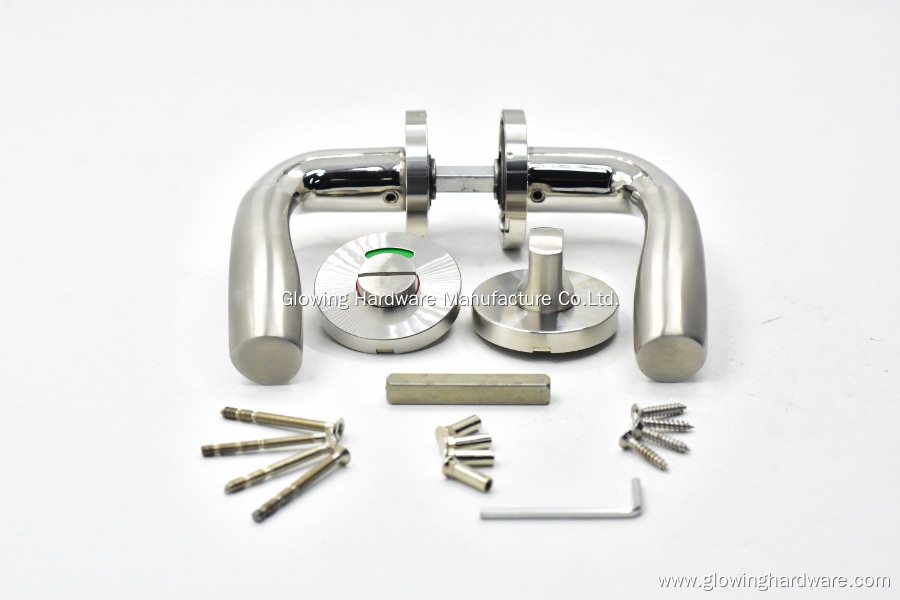
A door handle is touched thousands of times over its service life, often by many different users. That means the material must resist wear, remain stable in changing humidity, and hold up against frequent cleaning. Stainless steel performs well in these conditions because it is an alloy designed to protect itself.
The key mechanism is the passive layer formed by chromium in stainless steel. This thin film helps slow oxidation and reduces the chance of red rust compared with ordinary steel. In practice, this translates to hardware that maintains its look for longer, performs reliably in day-to-day use, and tolerates routine cleaning better than many plated or painted alternatives.
Stainless steel is also valued for its density and rigidity. A properly manufactured stainless handle feels solid and stable in hand, which directly affects perceived quality for doors in hotels, offices, retail entrances, and multi-family buildings where users expect consistent operation.
Stainless steel is good for door handles not because it is a premium label, but because its properties match common door-hardware stress factors. The advantages below are most noticeable in high-use doors.
Door handles experience repeated torque, pulling force, and impact. Stainless steel’s strength and resistance to deformation help the handle maintain alignment, reducing wobble and minimizing long-term looseness when the internal structure is designed correctly.
In typical indoor environments and many sheltered outdoor applications, stainless steel resists corrosion well. This makes it a dependable material for entrances, corridors, stairwell doors, and utility rooms where humidity may vary across seasons.
Door handles are high-contact surfaces. Stainless steel is widely used in environments that prioritize cleanliness because it can withstand frequent wiping with common cleaners when used appropriately. This matters for facilities that clean multiple times per day, such as offices, schools, healthcare-related buildings, and public venues.
Many finishes on door handles depend on coatings. Coatings can chip, peel, or wear through at touch points, exposing a different base color beneath. Stainless steel tends to maintain a more consistent appearance because the material itself is uniform. With the right finish selection, it can keep a clean look even after years of use.
Stainless steel is not immune to issues. Most problems are caused by mismatched grade selection, poor finishing, or incorrect installation rather than the material itself.
In coastal or high-humidity environments, salt deposits can cause brownish staining on stainless surfaces, especially if cleaning is infrequent. This is often a surface phenomenon but can look like rust and cause concern.
Where chlorides are high, such as oceanfront buildings, pool facilities, or areas exposed to de-icing salts, stainless steel can develop pitting if the grade and finish are not suited to the environment. Pitting is a localized form of corrosion that creates small holes, which is why coastal projects often require more corrosion-resistant grades.
Some stainless finishes show fingerprints more easily, particularly on polished surfaces. This is not a structural problem, but it can affect appearance in luxury residential or hospitality settings. Finish choice and maintenance expectations should be aligned.
A stainless handle can still feel loose if the mounting base, fasteners, spindle interface, or spring mechanism is weak. Material alone does not guarantee stability. Buyers should evaluate handle design, machining accuracy, and installation hardware.
These points are important because they shift selection from material-only thinking to performance thinking, which leads to fewer failures and fewer after-installation complaints.
Selecting a stainless steel door handle should follow a practical checklist. This prevents overpaying for features you do not need while ensuring the handle performs in your actual environment.
The most common grades in Door Hardware include 201, 304, and 316. The right choice depends largely on chloride exposure and humidity.
| Stainless grade | Corrosion resistance | Recommended environments | Typical selection logic |
|---|---|---|---|
| 201 | Moderate | Dry indoor areas | Cost-focused, low exposure |
| 304 | Good | Most indoor and general outdoor | Balanced choice for many buildings |
| 316 | Excellent | Coastal, marine, pool, high chloride | Higher resistance to pitting |
If your doors face sea wind, are close to pools, or are exposed to road salt in winter climates, grade selection becomes more than a preference. It becomes a performance requirement.
Finish affects both appearance and corrosion performance. Smoother finishes generally clean more easily and hold fewer deposits. In high-touch public doors, a finish that balances cleanability and fingerprint visibility is usually preferred.
Door thickness, lock type, and door weight matter. A handle set designed for a light interior door may not be ideal for heavy commercial doors. Ensure the handle’s mounting system supports the door’s usage intensity and the lock configuration.
If the building uses strong disinfectants, the handle should tolerate frequent cleaning without coating failure. Stainless steel is often selected because it is more forgiving than many plated finishes, but cleaners still matter, especially in high-chloride chemicals.
If you are evaluating stainless handle configurations, Glowing Hardware provides multiple options designed for stable installation and long-term use, which you can review here: stainless steel door handle.
Buyers often compare stainless steel against zinc alloy, aluminum, brass, and plated steel. Each has a place, but stainless steel is frequently chosen when the goal is to reduce lifecycle issues.
Zinc alloy handles are often die-cast and finished with coatings. They can look good initially, but the finish can wear at touch points, and corrosion resistance depends heavily on coating quality. Stainless steel usually provides more stable long-term appearance because the base material is consistent.
Aluminum is lightweight and corrosion-resistant, but it can scratch more easily and may feel less solid depending on design. Stainless steel offers higher density and often a more premium tactile feel, which matters in high-use doors.
Brass is durable and valued for traditional aesthetics, but it can tarnish and typically needs specific finishing to maintain appearance. Stainless steel is often easier to maintain and more resistant to environment-driven discoloration.
Plated steel can be cost-effective but is vulnerable if the coating is breached. Once exposed, the underlying steel can rust quickly. Stainless steel reduces the risk of corrosion from small surface wear because it does not rely solely on a thin outer layer for protection.
The practical conclusion is that stainless steel is usually a strong all-around choice when you want balanced durability, stable appearance, and predictable maintenance.
Stainless steel door handles do not require complex maintenance, but correct habits help preserve appearance and corrosion resistance, especially outdoors.
Routine cleaning removes deposits before they concentrate
In coastal areas, salt can settle on surfaces even when doors are sheltered. Periodic wiping with clean water and a soft cloth helps prevent staining.
Avoid chloride-based cleaners when possible
Bleach and chloride-heavy cleaners can increase corrosion risk if used repeatedly without thorough rinsing. Mild soap solutions and stainless-safe cleaners are generally preferred.
Protect the finish from abrasive tools
Steel wool and abrasive pads can scratch the surface and may embed iron particles, causing rust-like staining. Use non-abrasive cloths.
Inspect fasteners and mounting stability
A handle that loosens over time is often a mounting issue rather than a material issue. Re-tightening during early service can prevent long-term movement and wear.
A stainless handle is often selected to reduce lifecycle maintenance compared to coated materials, but it still benefits from a simple, consistent care routine aligned with the building’s environment.
Glowing Hardware provides focused, project-oriented services to support stainless steel door handle applications in hospitality and construction projects.
Architectural project support
Our solutions are developed for hotel projects and building engineering applications, ensuring consistency across large-scale installations.
OEM and customization service
A professional design team supports OEM requirements, including adjustments to handle structure, dimensions, finishes, and material selection based on project needs.
Installation guidance
We provide clear installation guidance to help reduce on-site errors, improve fitting efficiency, and ensure stable long-term performance.
Problem-solving support
Our team assists in addressing common installation and usage challenges, helping projects avoid loosening, misalignment, and functional issues.
Solution-based hardware supply
Rather than supplying single items only, we offer practical hardware solutions designed to integrate smoothly with doors, locks, and construction workflows.
Yes, stainless steel is generally a very good material for door handles because it balances durability, corrosion resistance, and cleanable surfaces in a way that suits real building use. It performs especially well in high-traffic doors and environments where long-term stability matters. The best results come from selecting the right stainless grade, choosing a finish that matches the environment, and using a handle design with strong internal structure and reliable mounting.
If your goal is to reduce corrosion risk, maintain consistent appearance, and deliver a solid feel in daily operation, stainless steel door handles are one of the most dependable choices available today.