Rental properties move fast. Tenants change, access needs change, and property managers often need a lock system that is easier to control than a traditional key setup. That is why more landlords, project buyers, and rental operators are turning to the keyless Smart Door Lock. It helps simplify access, reduces the problem of lost keys, and gives a property a more modern feel.
But convenience alone is not enough. In rental use, the biggest concern is security. If access is not managed properly, a smart lock can create as many problems as it solves. Old codes may still be active, backup access may be poorly controlled, or the lock may not match the actual door environment. For buyers who manage apartments, rental units, serviced residences, or project supply, the real question is not whether smart locks are useful. The real question is how to avoid security issues before they become tenant complaints or management risks.
traditional locks often create extra work in rental properties. When a tenant moves out, the owner may need to collect keys, check for copies, and sometimes replace the cylinder just to feel safe again. This costs time and money, especially when units turn over frequently.
A keyless smart door lock changes that approach. Instead of relying only on a physical key, access can be managed in a more flexible way. This is especially useful in rental projects where different users may need different permissions. A tenant may need daily access, maintenance staff may need limited access, and property managers may need emergency entry options.
For B2B buyers, that flexibility matters because rental security is no longer only about locking the door. It is also about controlling who can enter, when they can enter, and how quickly access can be updated.
In many rental cases, security issues do not start because the lock is weak. They start because access is not managed carefully. A former tenant may still know an old password. A temporary user may keep access longer than planned. A spare mechanical key may not be tracked properly. These are management gaps, and they can happen even when the lock itself has good functions.
That is why buyers should look at smart locks from a practical management angle. The lock should support clear access control, simple user updates, and a backup option that does not weaken the whole system. A product with multiple opening methods can be useful, but only when those methods are used with proper rules.
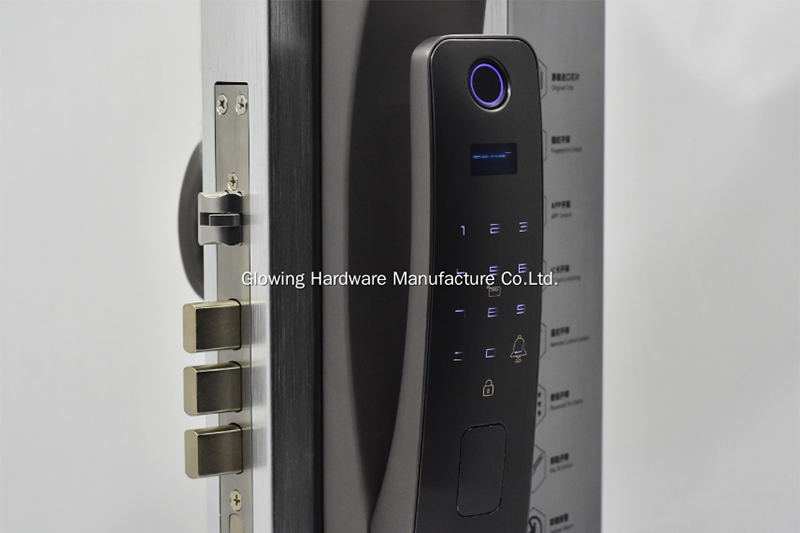
Our product fits this kind of requirement because it supports fingerprint, password, card, and mechanical key access. For rental use, that gives managers more than one way to handle entry while still keeping control organized. It also makes the lock easier to adapt to different user groups and different property models.
Some buyers worry that more unlocking methods mean more risk. In practice, the bigger issue is whether each method is managed correctly. A lock that only depends on one access method can become inconvenient very quickly in a rental setting. If that one method fails, the property manager may face unnecessary delays or emergency calls.
A keyless smart door lock with several access options can actually make rentals safer when used with clear rules. Fingerprint access is useful for fixed users. Password access can be updated when tenants change. Card access can work well in managed properties. A mechanical key remains important as an emergency backup rather than the primary daily solution.
This balance is useful for landlords and project operators because rental properties often face unpredictable situations. A good smart lock setup should help managers stay in control instead of forcing them into one rigid system.
One of the most common rental risks appears during move-out and move-in. If access is not reset quickly, there is a chance that an old tenant, cleaner, or short-term occupant still has valid entry information. This is one of the main reasons traditional lock management becomes inconvenient in rentals.
When using a keyless smart door lock, turnover should be treated as a routine security step. Old passwords should be cleared promptly. Cards should be canceled. Fingerprints should be removed when a tenant leaves. Backup keys should be checked and documented. A smart lock makes this process easier, but it still requires good operating habits from the manager or property team.
For rental property buyers, this is why supplier support matters. A good product should not only unlock the door. It should also be easy to manage, easy to explain to installers, and easy for the property side to maintain over time.
Security problems are sometimes caused by poor fitting, not weak electronics. If the lock does not match the door thickness, material, or structure, the result may be poor installation, unstable operation, or long-term wear that affects daily use.
Our product is suitable for wooden doors, metal doors, steel doors, interior doors, and outer doors, and it is designed for a wide door thickness range. That is important in rentals because not every project uses the same door type. Some properties need one smart lock solution across different units, while others need to match mixed door specifications in one development. A lock that fits more door conditions helps reduce installation errors and later maintenance issues.
For contractors and bulk buyers, this also reduces sourcing trouble. They do not want a lock that looks advanced on paper but causes fitting problems on site.
One practical issue in rentals is lock availability during low battery situations. If nobody checks the battery status, the user may be locked out at the wrong time, which creates frustration and emergency handling costs.
This is why battery planning should be part of normal property management. A smart lock with a clear low-power reminder and emergency power support is more suitable for rental use because it gives the manager time to act before the lock becomes a problem. The backup opening method also matters. In rentals, a backup should protect security rather than create a weak point that is easy to misuse.
For property operators, this is not only about convenience. A lock failure at night, during handover, or during a guest arrival can quickly turn into a service issue. Good planning reduces that risk.
Rental doors are rarely treated gently. Tenants may be in a hurry, moving items in and out, or using the lock many times each day. In short-term rentals or busy residential buildings, this happens even more often. That means the lock should not only be smart. It should also be physically reliable.
Our product uses aluminum alloy material and is made for regular daily use, which is important for buyers who are looking beyond the first installation. In rental projects, the real cost of a lock is not only the purchase price. It is also the maintenance cost, replacement frequency, and the amount of support needed after installation. A lock that performs steadily helps reduce those long-term costs.
For wholesalers and project buyers, this directly affects product reputation. A lock that causes too many field issues is difficult to keep in a long-term supply program.
Even the right lock can create problems if users do not understand how to use it. In rental properties, simple instructions make a big difference. Tenants should know how to enter correctly, how to use backup access, and what to do if the battery warning appears. Property staff should know how to reset credentials after move-out and how to check that access has actually been updated.
This is one reason technical support still matters in smart lock supply. Buyers do not only need the hardware. They often need installation guidance, service support, and practical advice so the system works properly after delivery. In rental settings, small mistakes in setup can become security concerns later.
Avoiding security issues with rentals is not only about choosing a smart-looking product. It is about choosing a keyless smart door lock that fits real property management needs, then using it with clear access rules, proper turnover procedures, and reliable installation.
Our fingerprint keypad smart door lock is a practical option for rental projects because it combines multiple unlocking methods, flexible door compatibility, durable construction, and supplier support that works for bulk orders and custom requirements. For landlords, distributors, builders, and project buyers, that creates a more manageable and more secure access solution.
If you are reviewing smart lock options for apartments, managed rentals, or project supply, feel free to contact us. We can help you check the right configuration for your door type, usage needs, and order plan, and provide practical guidance before your project moves forward.