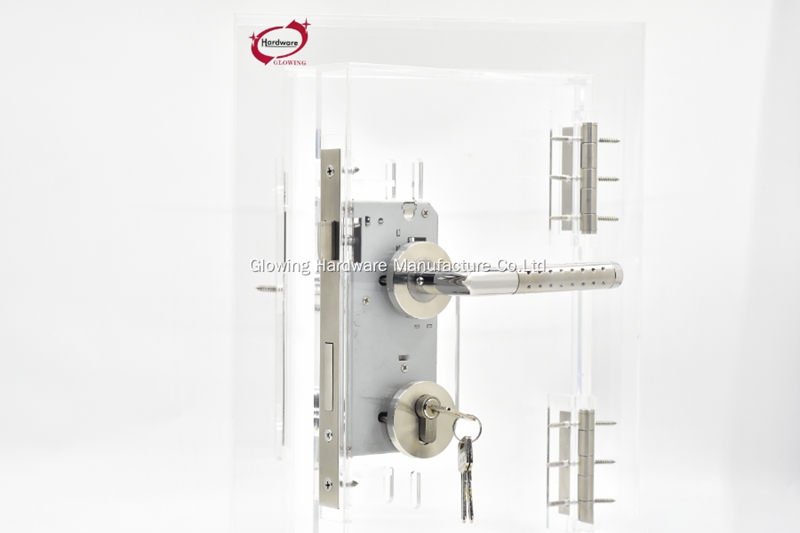
Senior living communities often design rooms, corridors, bathrooms, and activity areas around easier movement for older adults. lever handles are common because they are easier to press than round knobs, especially for residents with reduced hand strength, joint stiffness, or mobility limitations.
However, another problem appears in many family-friendly senior facilities. Visiting grandchildren may open doors too easily, enter restricted areas, or move between rooms without supervision. This creates a real conflict for operators: the handle must remain accessible for elderly residents, but the door should not become too easy for children to operate casually.
In senior living spaces, Door Hardware must support daily independence. Residents should be able to open bedroom doors, bathroom doors, clinic rooms, and activity areas without excessive grip strength.
If a handle becomes too difficult to operate, residents may need more staff assistance. This affects comfort, privacy, and daily workflow inside the facility.
Some child safety solutions make doors harder for everyone to use. In a senior community, that can create frustration, slower movement, and higher staff workload.
This is why childproof lever door handles should not be selected only from a children’s safety perspective. They must also match the physical needs of elderly users.
Many senior living communities welcome family visits. Children may follow grandparents into rooms, explore corridors, or enter service areas without understanding risk.
Doors to kitchens, storage rooms, medicine areas, maintenance zones, and staff-only spaces may need more control without making the whole facility feel restrictive.
Facility teams need door hardware that supports daily access management. A handle should help reduce casual child access where needed, while still allowing caregivers and residents to move smoothly through approved areas.
The goal is not to make every door difficult. The goal is to apply the right handle type to the right area.
The shape of the lever influences how easily different users can operate the door. A long, smooth lever may be convenient for older residents, but it may also be easier for children to pull or press.
An l-shape lever handle can support a stable grip and familiar operation, while still allowing facility managers to review additional lock, latch, or access control planning based on room function.
Door handles in senior living communities are used repeatedly throughout the day. Sharp edges, slippery surfaces, or uncomfortable shapes can reduce user confidence.
For operators reviewing childproof lever door handles, the handle should feel controlled, smooth, and suitable for frequent daily use. Poor touch experience can turn a safety upgrade into a usability complaint.
Senior living facilities need hardware that can handle cleaning, repeated contact, and long-term use. Stainless steel lever handles are often selected because they offer better durability in high-use environments.
When handles loosen, scratch easily, or lose finish quality, maintenance teams need to spend more time on repairs. Durable material helps reduce these recurring tasks.
Door handles are high-touch components. Cleaning frequency is often higher in care-related environments, shared corridors, bathrooms, clinic rooms, and activity spaces.
A stable finish helps the handle maintain appearance after repeated cleaning. This matters for both resident confidence and facility presentation.
Senior living communities should not treat all rooms the same. Bedroom doors, public corridors, bathrooms, staff rooms, kitchens, medicine storage, and activity rooms all carry different access needs.
Child safety planning should focus on doors where unsupervised child access creates operational or safety concerns. This keeps the facility accessible instead of overcomplicated.
For resident rooms, ease of use may be the priority. For storage rooms or service areas, stronger access control may be needed.
Before bulk ordering, buyers should map where the handles will be installed and how each door will be used by residents, staff, visitors, and children.
A handle that looks suitable in a product photo may not work well for residents with reduced strength or limited hand movement.
Before placing a large order, facility buyers should test handle comfort, grip angle, pressing force, surface feel, and daily cleaning convenience. This helps avoid replacing unsuitable hardware after installation.
In a large facility, inconsistent installation can create different user experiences from one room to another. Some handles may feel loose, stiff, or difficult to operate if installation standards are not clear.
Project buyers should confirm door thickness, lock compatibility, screw fixing, spindle structure, and finish requirements before mass installation.
Senior living communities do not need door hardware that only serves one group. The better choice supports elderly residents first, while reducing unnecessary access risks during family visits.
Our L-shape lever handle can be reviewed by buyers who need stainless steel door hardware for care facilities, apartments, hotels, and public buildings where comfort, durability, and controlled access all matter.
Door hardware should be selected after reviewing real movement patterns: residents moving independently, caregivers entering rooms, cleaners managing service areas, and visiting families walking through shared spaces.
When these details are considered early, childproof lever door handles can become part of a practical access plan rather than a product added after complaints appear.
The best procurement plan does not begin with replacing every handle at once. It begins by identifying the doors where elderly accessibility and child access conflict most often.
Once these areas are clear, buyers can choose suitable lever shapes, materials, finishes, and supporting lock structures with better confidence.
For senior living communities, care apartments, assisted living facilities, and healthcare-related buildings, our team can discuss door hardware planning based on room function, user group, installation requirements, and long-term maintenance needs.
More stainless steel door hardware information can be found on our website at https://www.glowingindustry.com/. A good handle should not force operators to choose between resident independence and visitor safety; it should help both work together in daily operation.