There is no single door-lock brand that is best for every project.
A residential homeowner, hotel operator, door factory, school, hospital, office developer, and hardware distributor may all define “best” differently.
One buyer may need a durable mechanical Mortise Lock. Another may prioritize temporary smart-lock credentials. A hotel may need coordinated handles, cylinders, and door guards across hundreds of rooms.
The better question is: which lock system meets the required function, standard, budget, installation, and maintenance plan?
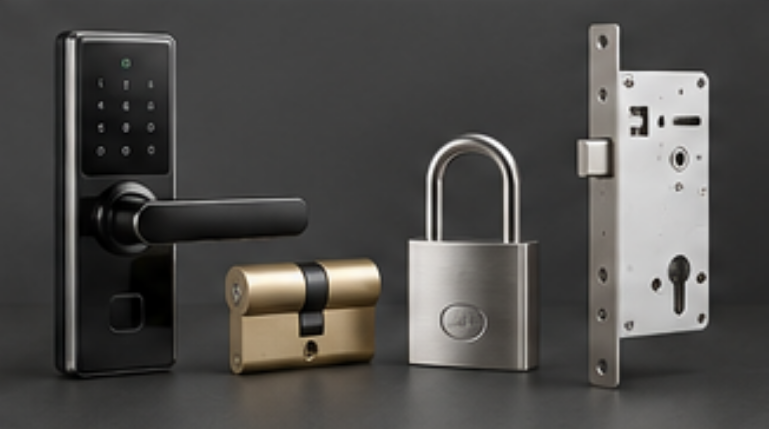
A familiar name can make product selection easier, but the brand label does not confirm that every model suits every door.
Within one supplier’s range, products may have different:
Lock functions
Materials
Performance grades
Cylinder structures
Finishes
Access methods
Door compatibility
Testing standards
Service requirements
Price positions
Buyers should evaluate the exact model and specification rather than assuming all products perform identically.
Independent testing provides more useful information than a general claim such as “heavy duty.”
ANSI/BHMA standards cover several door-hardware categories, including locks and latches, mortise locks, cylinders, auxiliary locks, multipoint locks, and residential locksets.
Many ANSI/BHMA standards use Grade 1, Grade 2, and Grade 3 classifications.
Grade 1 represents the highest performance level within the applicable standard.
The grade may reflect progressive requirements involving operation, strength, security, cycle life, and other product-specific tests.
The buyer should confirm which standard and grade apply to the actual product.
A well-tested lock can still perform poorly when installed on the wrong door.
Confirm:
Door material
Door thickness
Backset
Edge preparation
Frame construction
Strike position
Opening direction
Fire rating
User traffic
Environmental exposure
A hotel-room lock and a warehouse entrance lock may need completely different functions even when the doors are similar in size.
Common functions include:
Passage
Privacy
Entrance
Storeroom
Classroom
Hotel
Office
Deadlock
Emergency exit
Electronic access
Selecting the wrong function can create safety or operational problems.
For example, a storeroom lock may remain locked from outside at all times, while a passage lock does not provide security.
For mechanical locks, key management may be as important as the lock case.
Consider:
Key duplication control
Master-key requirements
Number of users
Rekeying method
Lost-key procedure
Cylinder replacement
Keyway availability
Project expansion
Emergency access
Spare-key storage
A simple cylinder may suit a private residence, while a hotel or office building may need a structured master-key plan.
For smart locks, the buyer should ask how the product will be managed after installation.
Important questions include:
What happens when the battery is low?
Is emergency power available?
Is there a mechanical override?
How are users added or removed?
Can temporary credentials be issued?
Are access records available?
Which mobile systems are supported?
How is administrator access protected?
Are replacement parts available?
How long will software support continue?
A feature-rich smart lock can become difficult to manage when the software and service plan are unclear.
The lock body may be concealed, but handles, cylinders, escutcheons, and faceplates remain visible and exposed to use.
The selected finish should tolerate the intended environment.
High humidity, coastal air, cleaning chemicals, sunlight, and frequent hand contact may affect surface appearance.
Buyers should request finish samples and confirm the recommended cleaning method.
Project hardware may remain in service for many years.
A suitable supplier should be able to discuss:
Replacement cylinders
Latches
Spindles
Handles
Electronic modules
Battery covers
Fixing screws
Strike plates
Software support
Compatible future orders
Replacing one component is more economical than changing the complete door set when the rest of the system remains usable.
A standard retail product is practical for a single residential door.
A large project may need custom backsets, lock functions, finishes, packaging, master-key planning, logos, or matching accessories.
A Custom Door Lock Manufacturer can review the lock together with the door and surrounding hardware rather than treating it as an isolated item.
Our factory was established in 1993 and has more than 30 years of experience in door and architectural hardware.
We manufacture smart locks, mortise locks, cylinders, latches, stainless steel handles, hinges, bolts, guards, viewers, stoppers, and other accessories.
OEM and ODM support covers product design, machining, forming, welding, surface selection, assembly, packaging, and international shipment.
Our equipment includes CNC lathes, digital milling machines, spark-erosion machines, pipe-bending equipment, forming machinery, and high-frequency welding systems.
Provide every supplier with the same door schedule and specification.
Compare:
Material
Dimensions
Lock function
Testing
Cylinder
Finish
Included accessories
Sample quality
Packaging
Lead time
Spare parts
Warranty terms
A quotation that excludes the cylinder, handle, strike, or packaging should not be compared directly with a complete lock set.
Send us the door types, quantities, lock functions, backsets, cylinder requirements, access methods, materials, finishes, testing standards, packaging, and target market.
We will prepare a coordinated proposal from a Custom Door Lock Manufacturer for residential, hotel, public-building, and commercial projects.